Showing posts with label News. Show all posts

Tuesday, October 22, 2019

New Teradata study reveals 94 percent of enterprises are facing hyper disruption and digitization

Across industries, markets and geographies, businesses are facing a new reality in terms of remaining competitive in the hyper-digitized world. These new imperatives – driven by rapidly evolving technologies, new entrants into the market and changing customer demands – require action from enterprises to ensure survival. 

A new survey conducted in September 2019 by Vanson Bourne, and sponsored by Teradata, called “Adapt or Perish: The New Reality in a Hyper-Digitized World,” captures the five forces impacting business success in this new global paradigm: Hyper Disruption, Pervasive Digitization, Autonomous Action, The Cloud Imperative and Enterprise Consumerization.


Most business leaders believe digitization can help address growing customer expectations for rapid and personalized engagement, and are beginning this process by refining business operations. While almost all survey respondents are in the process of digital transformation, some are further along than others.

99 percent of respondents are in the process of either moving to a digital business or leveraging/piloting digital technologies to change business models. More than four in 10 respondents (41 percent) indicated that digitization efforts were widespread, but almost as many (40 percent) indicated that digitization only existed across certain aspects of the business. Just 10 percent confirmed they had fully realized widespread digital transformation.


Nearly half (45 percent) of respondents believe their business requires improvement in their approach to managing data accessibility, which may include breaking down the many data silos in their organization, a critical requirement to becoming a digitally pervasive business.

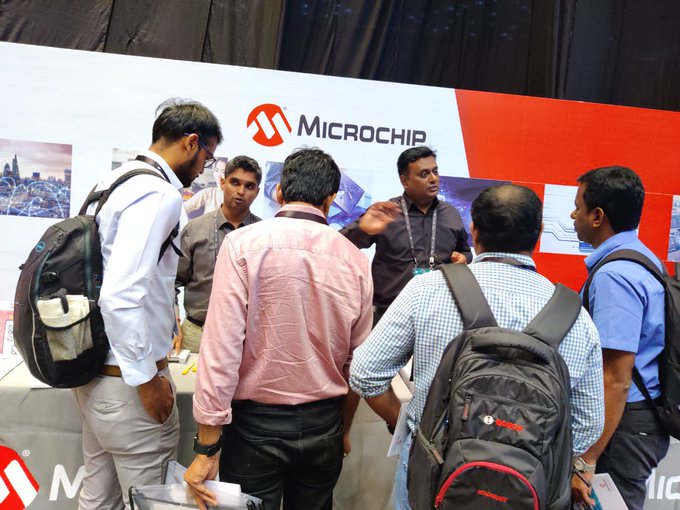
New Microchip RT PolarFire FPGA enables high-bandwidth space systems with lower total system cost

Developers of spacecraft electronics use radiation-tolerant (RT) field programmable gate arrays (FPGAs) to create on-board systems that meet the demanding performance needs of future space missions, survive the brutal launch process and continue to operate reliably in the harsh environment of space. 
Extending its RT FPGA offering to bring these capabilities to emerging high-performance space applications, Microchip Technology introduced Tuesday the RT PolarFire FPGA that is optimized to meet demanding requirements in spacecraft payload systems’ high-speed data paths with the lowest possible power consumption and heat generation.
A growing number of space applications need greater computational performance so they can transmit processed information rather than raw data and make optimal use of limited downlink bandwidth. 

The RT PolarFire FPGA enables this at significantly lower cost and with faster design cycles than possible with application-specific integrated circuits (ASICs). It also reduces power as compared to the alternative of using FPGAs based on static random access memory (SRAM), while eliminating their vulnerability to radiation-induced configuration upsets. The RT PolarFire FPGA is supported by all necessary radiation data, specifications, package details and tools customers need to start new designs now, initially with the commercial version of the device. 
The RT PolarFire FPGA builds on the success of Microchip’s RTG4 FPGA, which has been widely deployed in space applications that require its radiation-hardening by design against single event upsets (SEUs) and inherent immunity to single event latch-ups (SELs) and configuration upsets. 
For space applications that require up to five times the computing throughput, the RT PolarFire FPGA provides 50 percent more performance and triple the logic elements and serializer-deserializer (SERDES) bandwidth. It also provides six times the amount of embedded SRAM to enable more system complexity than previously possible using FPGAs and withstands total ionizing dose (TID) exposure beyond the 100 kilorads (kRads) that is typical of most earth-orbiting satellites and many deep-space missions.

The RT PolarFire FPGA cuts power consumption to approximately half that of alternative SRAM-based FPGAs with equivalent density and performance. Its SONOS non-volatile (NV) technology enables its configuration switches to be implemented in a more power-efficient architecture that cuts development and bill of materials costs through simplified, less expensive and lighter power system design, while minimizing heat dissipation to reduce thermal management problems. 
Designs are further simplified as compared to using SRAM-based FPGAs because the RT PolarFire FPGA eliminates the cost, complexity and recovery downtime of mitigating configuration SEUs.
The RT PolarFire FPGA will undergo the standard process for meeting QML standards including class V qualification for highly critical applications. Microchip has lengthy experience achieving QML qualification for its RTG4 FPGAs and other products, which requires extensive and continuous testing including screening each wafer and package assembly lot.
“We are supporting an evolving set of on-orbit space applications that need high levels of operating performance and density, low power consumption and minimal heat dissipation, while reducing system-level costs,” said Bruce Weyer, vice president of Microchip’s FPGA business unit. “Our RT PolarFire FPGA enables the major leap in computing throughput required for these applications including processing-intensive neural networks for object detection and recognition, high-resolution passive and active imaging, and high-precision remote scientific measurement, while maintaining a path to QML qualification.”

Monday, October 21, 2019

Red Hat, Vodafone Idea collaborate on building Network as a Platform

Red Hat announced Sunday that Vodafone Idea Limited (VIL), an Indian telecom service provider, is leveraging Red Hat OpenStack Platform, Red Hat Ceph Storage, Red Hat Ansible Automation Platform and Red Hat Enterprise Linux to transform its distributed network data centers to open standards, open interfaces based ‘Universal Cloud’. These will be also extended to serve third party workloads.


With the largest distributed cloud deployment in the country, VIL will be rapidly transforming its 100+ data centers across a “Universal Cloud,” where a shared software platform is capable of running multiple workloads e.g. Network, IT and third party applications across its distributed cloud locations.


Red Hat OpenStack Platform is enabling VIL to design efficient pods, which can be geographically distributed and taken closer to the end- users, helping to reduce latency and enable an optimal user experience. With Red Hat’s open APIs, VIL will be able to deliver actionable insights to its enterprise users, and help them potentially create a competitive advantage.


In collaboration with Red Hat, VIL plans to set up a DevOps team, to drive more consistent innovation and to help co-create new solutions and extend the platform to start-ups and developers.


In addition, VIL will further deploy Red Hat Ansible Automation Platform to automate workflows, and extend self-provisioning to VIL enterprise customers. VIL plans to work closely with the Red Hat Global Services team to build new capabilities and execute these initiatives.

Trend Micro strengthens cloud security position with Cloud Conformity acquisition

Trend Micro announced on Monday that it has acquired Cloud Conformity, a Cloud Security Posture Management (CSPM) company. The acquisition instantly broadens the cloud services Trend Micro can secure and resolves often overlooked security issues caused by cloud infrastructure misconfiguration.

Trend Micro’s strategy is built to ensure cloud security without disrupting how customers need to do business. This acquisition builds upon Trend Micro’s continuous innovation in cloud security, adding complementary capabilities that automatically identify and fix a range of cloud infrastructure configuration issues. 

It also optimizes costs and helps ensure compliance with industry regulatory standards such as PCI, GDPR, HIPAA and NIST.

Kingston Technology debuts enterprise-grade data center 450R SSD with enhanced I/O and latency predictability

Kingston Digital, the flash memory affiliate of Kingston Technology Company, announced Monday that it is shipping the Data Center 450R (DC450R) Enterprise SSD, a high performance 6Gbps SATA SSD with 3D TLC NAND, designed for read-centric application workloads. This streamlined server SSD delivers on performance while providing exceptional I/O and latency predictability, a requirement now amongst Data Center Class SSDs. 
Built to Kingston’s strict QoS requirements, the DC450R is designed to ensure performance consistency over a wide range of read intensive and read caching workloads.
Kngston’s DC450R is designed for workloads that require 24/7 uptime and reliability, such as Content Delivery Networks (CDN), edge computing applications and a wide array of software-defined storage architectures. DC450R presents a specifically focused feature set that enables data centers to select the most cost effective SSD for their workloads. 
Businesses require results as they deliver on products, solutions and service level agreements (SLAs) and DC450R provides system builders and Cloud providers with a high performance, economical SSD standard they can count on.

Friday, May 3, 2019

FileShadow delivers thin provisioned storage for virtual desktops, allowing access to the FileShadow vault within the desktop

FileShadow announced this week FileShadow for Windows Virtual Desktop that provides thin provisioned storage to companies using virtual desktops, separating users’ data from the operating system, local applications and user settings in the data center—reducing costs for any company using virtual desktops.

FileShadow thin provisioned storage allows virtual desktops to have access to large vaults without synchronizing data to the virtual desktop server. All of the content is available, but only downloaded on demand to the local virtual desktop when edited or modified.

FileShadow is a service that aggregates files from multiple cloud sources, Windows Virtual Desktops, Windows PC and macOS desktops and Drobo network and direct attached storage (NAS/DAS) devices into one secure, reliable and searchable cloud vault.


Compatible with Amazon WorkSpaces, Citrix Virtual Apps and Desktops, HVE ConneXions VDI Solutions, IOXO Workspace Technology, Microsoft Windows Virtual Desktop, and VMWare Horizon, FileShadow for Windows Virtual Desktop delivers thin provisioned access to the user’s vault.
Using machine learning, FileShadow provides superior indexing and searching capabilities. With FileShadow, users can quickly find any file with advanced search features such as file content, OCR of PDFs, GPS location and image searches.

FileShadow is hosted on Google Cloud and IBM Cloud with storage on IBM Cloud Object Storage (COS) and Wasabi’s Hot Cloud Storage, providing “11 nines” of durability for optimal file protection. FileShadow supports multiple cloud storage sources, including Windows PC and macOS desktops (including iCloud Drive files and iCloud Photos), Drobo NAS/DAS devices, Adobe Creative Cloud, Adobe’s Lightroom solutions, Box, Dropbox, Google Drive, OneDrive and OneDrive for Business.

Users can store all of their content in FileShadow, enabling them to access their content and receive the archiving, aggregating and searching capabilities of FileShadow’s service. IT departments will save money by using FileShadow to minimize the amount of storage allocated for their virtual desktop servers, and user storage will be protected by the FileShadow vault—made explicitly for reliable storage, search and access of files.

FileShadow for Windows Virtual Desktop supports and integrates with cloud-based Desktop as a Service (DaaS) and premise-based Virtual Desktop Infrastructure (VDI) solutions. With FileShadow in place, customers can move between DaaS and VDI because their data is now portable.

“One of the issues that accompany a virtual desktop deployment is how to secure long-term storage of users’ files,” said Tyrone Pike, president and CEO of FileShadow. “With FileShadow, all of the archiving, aggregation and searching capabilities used by traditional desktop users are now available for virtual desktop users. Users simply install the FileShadow Desktop App on their virtual desktop and sign in; all of their files are available.”

The FileShadow Service is free of charge for up to 100 GB of data. Subscriptions for FileShadow for Virtual Desktops are available for $25/month for 2TB and each additional terabyte is $10/month.

J.P. Morgan joins Microsoft to push adoption of Quorum in a bid to get more enterprises on to its free-to-use platform

J.P. Morgan and Microsoft announced Thursday that they have signed a memorandum of understanding to form a strategic partnership to accelerate the adoption of enterprise blockchain.

Through this partnership, Quorum, developed by J.P. Morgan, will become the first distributed ledger platform available through Azure Blockchain Service, enabling J.P. Morgan and Microsoft customers to build and scale blockchain networks in the cloud.

The partnership with Azure will further strengthen Quorum as a fully integrated, Ethereum-based blockchain platform and suite of applications. Together, the platform will enable enterprise businesses across industries to shift their focus from infrastructure management to application development, driving transformative business value. Customers will be able to rapidly grow their networks while benefiting from lower costs, simplified deployment and built-in governance enabled through Azure Blockchain Service.


Going forward, J.P. Morgan and Microsoft will continue to work together to address common enterprise, Independent Software Vendor, and developer needs for building and deploying blockchain applications on Quorum in the cloud. Microsoft will also provide engineering, consulting and go-to-market support for Quorum.

“We are incredibly proud of the success Quorum has had over the last four years, as organizations around the world use Quorum to solve complex business and societal problems via blockchain solutions,” said Umar Farooq, Global Head of Blockchain, J.P. Morgan. “We are delighted to partner alongside Microsoft as we continue to strengthen Quorum and expand capabilities and services on the platform. Azure will bring unique strengths to enterprise clients using Quorum.”

“As digital transformation extends beyond the walls of an individual organization, companies need solutions that enable them to securely share their business processes and data in order to drive imaginative new business models and reinvent industries. We’re thrilled to partner with a leader like J.P. Morgan to establish a foundation on which enterprises and partners can rapidly build and scale blockchain networks,” said Peggy Johnson, Executive Vice President of Business Development, Microsoft. “Together, we’re taking a truly transformative technology like Quorum and making it available through the Azure platform to accelerate innovation for our customers.”

In addition to providing a platform for Quorum customers to build blockchain networks and applications, Quorum will continue to power J.P. Morgan and Microsoft blockchain programs and first-party apps, such as the Interbank Information Network, JPM Coin and Microsoft’s Xbox royalty payment process, among others.

Virtium debuts high-endurance, low-power, M.2-compliant USB 3.1 solid-state drives for industrial embedded applications

Virtium introduced this week its TuffDrive M.2 USB line of SSDs that bring high-endurance, low-power, small-form-factor solid-state storage to industrial-embedded applications.

These SSDs enable designers to take advantage of USB 3.1’s widespread host support and efficiently connect M.2 form factor drives to host systems lacking the SATA storage interface. The drives provide cost-effective, secure storage to a wide range of uses that require lower capacities, such as operating system boot, code and application storage, virtualization, and light data logging.

Virtium’s TuffDrive SSDs leverage the M.2 2242 form factor (22mm x 42mm) and USB 3.1 to achieve small-footprint solid-state storage connected to host systems via a common, cost-effective interface. That combination reduces power consumption, and thus heat generation, compared to SATA-SSD storage.


It also lowers electromagnetic interference (EMI), making the SSDs a viable option for medical, telecommunications and other EMI-sensitive applications, as well as for densely populated circuit boards. Additionally, the new drives’ high-integrity M.2-to-USB 3.1 connection enables shock and vibration resistance superior to designs using alternative form factors and interfaces.

The hot-pluggable TuffDrive M.2 USB line is designed with lower-capacity applications in mind; the embedded SSDs not only lower power requirements and generate less heat than SATA drives, they also reduce system bill-of-materials outlays because those applications call for relatively low capacities.
The drives are available with high-endurance options and supported by Virtium’s vtGuard power-fail protection, vtView industrial SSD software for drive monitoring, and value-added service and support that includes ten-plus years of product availability and in-field integration support. Additionally, Virtium offers optional AES-256 self-encryption for the TuffDrive M.2 USB line, as encrypted SSDs with this feature provide significantly greater protection for data at rest than drives without it.

“Virtium is bringing to market the lowest-power, highest-reliability, M.2-compliant USB drives,” said Scott Phillips, vice president of marketing at Virtium. “Our engineers took a highly creative approach in developing an SSD line that leverages a form factor proven in embedded-industrial designs and a widely used, highly efficient interface. This achievement is particularly important for designers designing with IIoT SSDs and have to work with host systems that lack SATA, while still requiring lower power and heat.”

“By combining the ubiquitous USB interface with the small form factor of the M.2 SSD, Virtium makes it easy for embedded-industrial systems designers to extend Flash data storage into new applications,” said Alan Niebel, president of WebFeet Research and author of the 2018 Non-Volatile Memory Market Shares by Vendor Report. “The drives' high endurance, low power and cost-effectiveness empower those designers with solid-state storage providing secure data storage in demanding designs.”

The TuffDrive M.2 USB solid-state drives are sampling now and have been qualified by select Virtium customers.

Wednesday, April 24, 2019

Lightbits debuts SuperSSD, its ultra-high capacity, high performance SSD storage appliance to meet needs of AI, Machine Learning

Lightbits Labs introduced on Tuesday SuperSSD, its scalable, Ethernet-attached SSD solution that addresses data storage speed, capacity and reliability needs of artificial intelligence (AI) and machine learning (ML) training systems. SuperSSD makes storage transparent, so applications like high-speed databases, high performance analytics and customer engagement applications can deliver optimal user experiences.

This solution from Lightbits is purpose-built for fast and massive parallel access to data. The appliance is designed to support the scale, performance and high-availability needs of enterprises undergoing resource intensive digital transformation. AI and ML are prime examples of applications that historically relied on locally-stored data on direct attached storage (DAS) with SSDs.


However, as their data sets scaled to a massive size on distributed resources, DAS solutions become ineffective, complex to manage, costly, and potentially at risk of being a single point of failure. These growing needs for scale, performance and distributed access require a new type of storage system designed for fast and massive parallel access to data.

As a plug-and-play appliance, SuperSSD offers a variety of benefits around simplicity, performance, fault tolerance and cost efficiencies. It is scalable from 64TB to 1PB usable capacity (field upgradeable) that can be shared across multiple compute nodes; supports up to 5 million 4K input/output operations per second (IOPs) and with a latency consistency of less than 200us with end-to-end NVMe; provides dual 100GbE wire-speed performance; with four times data reduction or greater at line rate, increasing usable storage capacity while enhancing SSD endurance and accelerating write-intensive applications.


The SSD also includes Elastic Erasure Coding (EC) that isolates SSD failures, ensuring data protection and no service interruption; fully offloads all the storage tasks from the application server; provides in-storage processing so that user-defined functions can run in the storage server to maximize storage bandwidth and improve application performance; uses standard TCP/IP network infrastructure for immediate shared storage supporting many applications and compute nodes; and includes 2U standard rack server with simple plug-and-play installation.

By virtualizing and managing a large pool of NVMe SSDs with a global flash translation layer (GFTL), SuperSSD ensures efficient storage utilization and wire-speed access to very large data sets. Deployed using existing network and compute infrastructures, SuperSSD is seamless to install, allowing data scientists to easily scale their storage reach and performance when and where they need it.

“Accessing massive amounts of data with low latency is a priority for deep learning, artificial intelligence and high performance analytics workloads,” said Roger Peene, vice president of product planning and strategy for Micron’s Storage Business Unit. “Solutions like Lightbits Labs’ SuperSSD can enable customers to access large data sets with rich data services in a low-latency, disaggregated infrastructure solution.”

“Solutions built around the speed and efficiency of NVMe over TCP offer frictionless disaggregation for companies needing scalable storage. Based on our deep familiarity with the founding team and their outstanding track record, Dell Technologies Capital is excited to be an investor supporting Lightbits Labs,” said Yair Snir, vice president and managing director, Dell Technologies Capital.

“We expect data-intensive applications such as AI and machine learning to drive increased use of high-performance storage to ingest and process the associated large data sets,” said Dennis Hahn, senior analyst, cloud and data center research practice at IHS Markit. “In our recent DC Storage Strategies Survey, respondents indicated they are seeking choices and options in the way they deploy their storage solutions. Clearly, enterprises see the need for high performance and low-latency storage that is scalable and easily accessible for applications, where storage is accessed without the need for server software additions.”

“Although it is rarely the center of the story, storage is a key infrastructure element that enables AI and machine learning,” said Avigdor Willenz, Founder and Chairman of the Lightbits Labs Board of Directors. “By making fast and massive access to data available everywhere and much simpler from start to finish, Lightbits’ SuperSSD enters the AI market as a true storage and data infrastructure game changer.”

“AI and machine learning are exceedingly resource intensive, involving access to distributed devices and massive amounts of data,” said Eran Kirzner, Lightbits Labs CEO and co-founder. “As the amount of data analyzed increases, DAS solutions become completely ineffective, complex to manage, costly and potentially a single point of failure. By ensuring zero downtime, SuperSSD is the only storage solution that can support continuous AI and machine learning processes, reliably, cost-effectively, and with high-performance and simplicity.”

The Lightbits Labs SuperSSD appliance is available for purchase now, along with the two NVMe/TCP solutions Lightbits introduced last month: LightOS software and the LightField storage acceleration card.

Network Critical debuts SmartNA PortPlus packet broker line, delivering visibility to keep pace with modern dynamic networks

Network Critical launched Tuesday its new line of SmartNA PortPlus packet broker appliances, to provide scale-out visibility to make it easier to monitor and secure dynamic, growing networks.

Unlike competitive products that require complex management or expensive scale-up architectures, Network Critical’s PortPlus line is built from the ground up to scale rapidly as customer networks grow, bridging the gap between ultra-high-speed networks and existing management, monitoring and security tools. Using its distributed scale-out architecture, as IT teams and tools need visibility across more ports or faster networks, users can add additional PortPlus units that behave as a single, larger, faster appliance.


A high-density, high-performance packet broker solution, the PortPlus family can scale from 54 to 194 ports and handle 1/10/25/40/100G speeds – all through one flexible series of appliances. With exceptional throughput and ability to manage traffic at a range of speeds, it acts as a central hub that gathers and distributes the right packet data to the right network monitoring or security tools as needed.

PortPlus gives network tools and systems the packet-level access needed to monitor and protect critical, complex and ever-changing infrastructure, from hybrid or software-defined networking to virtualization and more.

Additional load balancing capabilities allow organizations to leverage aging network monitoring tools that may struggle to keep up with rapidly increasing network speeds. This is vital for optimizing tool performance and maintaining budget discipline in dynamic and growing infrastructures.


Network growth and the addition of new tools and systems inevitably requires more packet brokers to keep pace. PortPlus breaks this cycle, allowing companies to add ports or increase performance as needed while still maintaining easy management of the expanded system.

Customers can start with a single PortPlus 54-port appliance that provides a foundation for understanding what is happening on the network. To add scale and density, additional 48-port appliances can be added - to give up to 194 ports. Regardless of the number of PortPlus appliances involved in a given setup, the system functions as one large collection of ports, and is always configured and managed through a single-pane management interface.

This design delivers a scale-out visibility layer that’s cost-effective, easy to manage and flexible, eliminating the need for businesses to completely overhaul their systems and purchase new “scaled up” equipment every time they reach a growth point.

The PortPlus system is managed entirely through Network Critical’s patented Drag-n-Vu interface, which allows organizations to filter traffic based on IP addresses, protocols, ports and VLANs to provide improved network visibility. The intuitive Drag-n-Vu system allows for fast and error-free configurations and makes it easy to add complex filter rules and port mapping while minimizing configuration time and costly mistakes.

Designed around a next-generation network and server-ready PortPlus base unit with 48 x 1/10/25G ports and 6 x 40/100G ports, the line is able to handle 1/10/25/40/100G speeds and provide a future-proof, scale-out visibility layer with up to 194 ports, and features a programmable architecture built to support workload density, emerging protocols and new technologies. 

It is also managed entirely through the intelligent and intuitive Drag-n-Vu user interface for fast, error-free configuration of the entire system; features a 1.8 Tbps system throughput supports Maximum Line Rate on every interface, and comes enabled with Dual Hot swap power supplies and fans for greater resilience.

“There’s a reason companies are adopting modern scale-out infrastructure for things like cloud processing or data storage: lower cost, easier management and simple expansion. We think it’s high time they can grow their network visibility the same way,” said Alastair Hartrup, Global CEO of Network Critical.  “As networks become multi-vendor, multi-cloud, and multi-fabric, companies are struggling with the visibility needed to maintain tight control, hardened security and adequate service-level performance. PortPlus allows them to finally grow that layer of persistent visibility right along with changing demands.”

“Every business today needs granular insight across their entire network, and the new PortPlus family delivers that visibility in spades, without the need to constantly scale up to larger, more expensive packet broker technology,” said Hartrup. “The PortPlus family allows our customers to scale their networks in a cost-effective manner, accommodating legacy tools with lower-speed ports while quickly enabling the addition of newer tools with greater processes capabilities. Our disruptive design and superior technology allow organizations to send the right traffic to the right tools and maintain a scale-out visibility layer that supports critical management, monitoring and security functions as networks grow.”

Masimo secures FDA clearance for neonatal RD SET Pulse Oximetry sensors with improved accuracy specifications

Masimo announced that RD SET sensors with Masimo Measure-through Motion and Low Perfusion SET pulse oximetry have received FDA clearance ...