Showing posts with label industrial. Show all posts

Wednesday, January 1, 2020

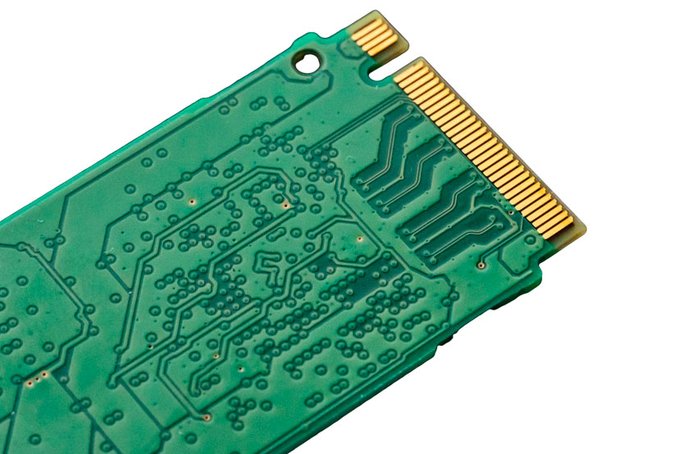
New Greenliant NVMe U.2 EnduroSLC Industrial Enterprise EX Series offers high performance and ultra high endurance

Greenliant is now sampling its NVMe U.2 EnduroSLC Industrial Enterprise EX Series solid state drives (SSDs) to customers that require ultra high endurance primary storage with sustainable low latency and high performance in extreme environments. 

Designed with Greenliant’s EnduroSLC Technology, NVMe U.2 Industrial Enterprise EX Series SSDs provide ultra robust data retention and ultra high system-level lifetime endurance of 30 drive writes per day (DWPD) for five years.


The NVMe U.2 EnduroSLC Industrial Enterprise SSDs with 1-bit-per-cell (SLC) NAND includes ultra high endurance that reaches 30 DWPD for five years; delivers high capacity offered from 800 GB to 1.92 TB; with high performance that reaches up to 2,600/1,900 MB/s read/write. 

It also offers on-chip adaptive RAID that improves SSD reliability; power interrupt data protection that helps prevent data corruption during power failures; industrial temperature that operates between -40 and +85 degrees celsius, and data security functionality that supports AES 256-bit encryption and crypto erase.


“For the highest levels of data integrity, Greenliant’s NVMe U.2 Industrial Enterprise SSDs implement on-chip adaptive RAID,” said Xuanhui Li, vice president of business development, Datacenter Products, Greenliant. “With Greenliant’s NVMe U.2 Industrial Enterprise SSDs, customers can achieve the efficiency and scalability required to meet the demands of write intensive applications in harsh environments.”

Greenliant is sampling its new G7200 Industrial Enterprise EX Series SSDs to customers now, and expects to start shipping in volume production by end of 2019. Greenliant also plans to ship its 3-bit-per-cell (3D TLC NAND) Enterprise PX Series SSDs in capacities from 960 GB to 3.84 TB in the first quarter of this year. 

Saturday, December 28, 2019

Greenliant SATA 2.5-inch EnduroSLC industrial enterprise SSDs deliver SLC data storage that provide ultra high endurance

Greenliant is currently sampling its SATA 2.5-inch EnduroSLC Industrial Enterprise EX Series solid state drives (SSDs) for primary storage applications that require ultra high endurance under extreme temperature conditions. 

Designed with Greenliant’s EnduroSLC technology, SATA 2.5-inch Industrial Enterprise EX Series SSDs provide ultra robust data retention and ultra high system-level lifetime endurance of 30 drive writes per day (DWPD) for 5 years. EnduroSLC is a proprietary 3D NAND management technology that delivers high reliability applications requiring superior data retention and endurance in extreme temperature, high stress environments. 


With advanced hardware ECC capabilities and NAND flash management algorithms, EnduroSLC Technology significantly extends the write endurance of 1-bit-per-cell (SLC) SSDs reaching industry leading 250K+ program-erase (P/E) cycles. EnduroSLC enabled products meet robust data retention requirements under complex temperature conditions and support wide cross-temperature ranges between data programming and reading. Further, due to its substantially lower bit error rate, an EnduroSLC SSD provides better consistency in read/write performance throughout product lifetime. 

The SATA 2.5-inch EnduroSLC industrial enterprise SSDs with 1-bit-per-cell (SLC) NAND include ultra high endurance that reaches 30 DWPD for five years; high capacity offered from 800 gigabytes to 1.92 terabytes; on-chip adaptive RAID that improves SSD reliability; power interrupt data protection that helps prevent data corruption during power failures; industrial temperature that operates between -40 and +85 degrees Celsius; and data security supports AES 256-bit encryption and crypto erase.

By leveraging over 25 years of solid state storage design expertise, Greenliant is dedicated to developing durable, reliable and secure storage solutions for embedded systems and enterprise data centers. The company is headquartered in Silicon Valley with product development centers in Santa Clara, Beijing, Shanghai, Xiamen and Hsinchu.


“Greenliant has brought its SLC NAND expertise to the enterprise with its new line of EnduroSLC Industrial Enterprise EX Series SSDs,” said Xuanhui Li, vice president of business development for datacenter products, Greenliant. “With high reliability and outstanding quality of service, Greenliant’s industrial enterprise storage products are ideal for mission critical, I/O intensive applications in aerospace, defense, transportation, energy and power, communications and industrial control.”

The SATA 2.5-inch Industrial Enterprise EX Series expands the EnduroSLC product family, which also includes SATA M.2 2242/2280, mSATA, SATA 2.5-inch and CFast ArmourDrive, and SATA 6Gb/s NANDrive and 100-ball/153-ball eMMC NANDrive ball grid array (BGA) SSDs.

Greenliant is sampling its new G3200 Industrial Enterprise EX Series SSDs to customers now, and expects to start shipping in volume production by end of this year. Greenliant is also shipping its 3-bit-per-cell (3D TLC NAND) G3100 Enterprise PX Series SSDs in capacities from 480 GB to 3.84 TB. 

Sunday, December 15, 2019

Wind River announces RISC-V support for VxWorks RTOS

Wind River announced this week RISC-V open architecture support for its VxWorks real-time operating system (RTOS), which is a widely deployed commercial RTOS to have support for the RISC-V open hardware instruction set architecture (ISA). 


The company has also joined the RISC-V Foundation, a non-profit consortium chartered to standardize, protect, and promote RISC-V ISA together with its hardware and software ecosystem for use in all computing devices.


VxWorks is a deterministic, high-performance RTOS that sets the standard for a scalable, future-proof, secure, safe, and reliable operating environment for mission-critical devices and systems that must meet the highest standards.


VxWorks is ideal for hard real-time embedded applications because it is a deterministic, priority-based, preemptive RTOS with low latency and minimal jitter. In addition to standard preemption, VxWorks can ensure that safety- and time-critical applications get a predetermined number of CPU cycles through various forms of scheduling as well as time and space partitioning. It also provides flexible features needed for various industries. 


As new features and functionality are added to VxWorks, compatibility is always top of mind because Wind River strives to protect and future proof its customers’ software and tool investments. Compatibility allows developers to take advantage of the latest VxWorks innovation, enabling them to add new features and upgrades with minimal retesting of the entire system, thereby saving both project time and expense.


VxWorks has IPv4 and IPv6 stacks that are also time-sensitive networking (TSN) capable, guaranteeing real-time communications and packet delivery within a bounded time or latency on a switched Ethernet network. VxWorks supports industrial applications, including but not limited to OPC Unified Architecture (OPC UA); SocketCAN used in automotive applications; and host, target, and on-the-go (OTG) USB.


VxWorks supports 32- and 64-bit, as well as multi-core processors including Intel, Arm and Power Architecture. Its comprehensive multi-core processor support allows OS configurations for asymmetric multiprocessing (AMP) and for symmetric multiprocessing (SMP) with CPU affinity for bound multiprocessing (BMP). 


Adding RISC-V support for VxWorks comes on the heels of the recent wave of innovations made to the RTOS, making it the first to include support for C++17, Boost, Python, and the Rust collection of technologies.


“We are pleased to welcome Wind River into the RISC-V Foundation and our global ecosystem," said Calista Redmond, CEO of the RISC-V Foundation. “VxWorks significantly extends the reach of RISC-V in the embedded developer space. We look forward to continued software developments by Wind River and the RISC-V community.”


“It’s exciting to see RISC-V gain significant industry traction as it brings the dynamism of open architecture development to hardware,” said Michel Genard, vice president of product at Wind River. “Wind River is very pleased to continue innovating VxWorks while contributing to the success of RISC-V with collaborations like the ones we have with SiFive and MicroChip providing support for their Unleashed and PolarFire SoC FPGA boards.”


“Having VxWorks support for our RISC-V-based PolarFire SoC FPGA family brings an extremely compelling offering to embedded systems designers who increasingly need real-time, and Linux capable solutions that are low power, thermally efficient, and secure,” said Shakeel Peera, associate vice president, marketing, FPGA business unit at Microchip. “Our partnership with Wind River is an important one as we work together to advance the collaborative RISC-V ecosystem and community.”


“The adoption of RISC-V by Wind River in VxWorks is a great step in the ongoing enablement of the RISC-V ecosystem,” said Dr. Naveed Sherwani, president and CEO of SiFive. “The ability to run VxWorks on SiFive Core IP and devices will enable new application markets across the world.”

Thursday, December 12, 2019

Intel Research recognizes digital skills gap slowing Industry 4.0 in the manufacturing sector

Intel released Thursday results of a new study “Accelerate Industrial,” which represents comprehensive view of Industry 4.0, the digital transformation of the manufacturing sector. The research uncovered a serious skills gap that most Western industrial production training programs and government investment initiatives fail to address.

The study found that current leaders need to create tomorrow’s future-ready workforce. This requires the collaboration of universities, government and industry – including initiatives that focus on worker training for the transforming manufacturing sector.


Accelerate Industrial” was conducted and authored by Dr. Faith McCreary, a principal engineer, experience architect and researcher at Intel, in tandem with Dr. Irene Petrick, senior director of Industrial Innovation for Intel’s Industrial Solutions Division. The study encompasses mobile ethnographies and interviews with over 400 manufacturers and the ecosystem technologists that support them. The work is being released as a series of reports.

A recent Deloitte/Manufacturing Institute study suggests that industries are entering a period of acute long-term labor shortages, with a shortfall in manufacturing expected to be 2.4 million job openings unfilled by 2028, resulting in a $2.5 trillion negative impact on the U.S. economy. Germany and Japan, two other developed economies, are expected to fare even worse in terms of this projected labor shortage.


With the increasing proliferation of data, connectivity and processing power at the edge, the industrial internet of things is becoming more accessible. However, successful adoption remains out of reach for many: two of three companies piloting digital manufacturing solutions fail to move into large-scale rollout.

The study uncovered the top five challenges cited by respondents that have the potential to derail investments in smart solutions in the future, with 36 percent citing “technical skill gaps” that prevent them from benefiting from their investment; 27 percent expect “data sensitivity” from increasing concerns over data and IP privacy, ownership and management; 23 percent found that they lack interoperability between protocols, components, products and systems; 22 percent citing security threats, both in terms of current and emerging vulnerabilities in the factory; and 18 percent reference handling data growth in amount and velocity, as well as sense-making.


Accelerate Industrial” points to the rising importance of the digital skills required to navigate and succeed in this new landscape.

The research found that while there is a big appetite for digital transformation – 83 percent of companies plan to make investments in smart factory technologies – the most important skills and characteristics cited for that transformation are not ones that are typically emphasized by most industry job training programs or relevant policymakers.

Future skills cited by respondents point to the need to go beyond the basics of programming to embrace a deep understanding of digital tools, from data collection to analytics and real-time feedback directly to the operating environment. 

The top five future skills required to support digital transformation in manufacturing are “Deep understanding” of modern programming or software engineering techniques; “digital dexterity,” or the ability to leverage existing and emerging technologies for practical business outcomes; data science; connectivity, and cybersecurity.

Thursday, November 21, 2019

Greenliant adds SD and microSD industrial memory cards to ArmourDrive lineup to boost efficiency, performance

Greenliant has expanded its ArmourDrive portfolio with high reliability Secure Digital (SD) and microSD industrial memory cards. Built with advanced 3D NAND in 3-bit-per-cell (TLC) and 1-bit-per-cell (SLC) configurations, SD and microSD ArmourDrive products offer endurance options of 3K (PX Series) and 30K (EX Series) program-erase (P/E) cycles, respectively. 


Benefits of SD and microSD ArmourDrive include industrial temperature that operates between -40 and +85 degrees celsius; high endurance that reaches up to 30K P/E cycles (EX Series); high performance that supports UHS I-104 ultra high bus speed mode; rugged providing resistance to shock (1500G), vibration (20G) and water (IPX7 rating); and achieving over 3 million hours for Mean Time Between Failures (MTBF)


SD and microSD ArmourDrive EX Series cards with SLC configurations are available in capacities from 8 GB to 64 GB, and PX Series cards with TLC configurations are offered from 32 GB to 256 GB. UHS Speed Class 10 and SD Specification 6.10 compliant, SD and microSD ArmourDrive cards reach up to 95/85 MB/s sequential read/write performance. 


These memory cards provide reliability, stability and removability, making them ideal for a range of demanding and space-constrained applications, such as handheld data loggers and scanners, professional video and photo cameras, portable medical diagnostic tools, ticket and vending machines, transportation diagnostics, telematics, test and measurement equipment, surveillance and industrial automation systems.


Greenliant is currently shipping 32, 64, 128 and 256 GB SD and microSD ArmourDrive PX Series industrial memory cards and expects to start production shipments of the EX Series in December of this year. 

Tuesday, November 19, 2019

Cree and STMicroelectronics boost existing silicon carbide wafer supply agreement

Cree and STMicroelectronics announced expansion and extension of an existing multi-year, long-term silicon carbide wafer supply agreement to more than US$500 million. The extended agreement is a doubling in value of the original agreement for the supply of Cree’s advanced 150mm silicon carbide bare and epitaxial wafers to STMicroelectronics over the next several years, the companies announced Tuesday. 

The increased wafer supply enables the semiconductor leaders to address the rapidly growing demand for silicon carbide power devices globally, particularly in automotive and industrial applications.


The adoption of silicon carbide-based power solutions is rapidly growing across the automotive market as the industry seeks to accelerate its move from internal combustion engines to electric vehicles, enabling greater system efficiencies that result in electric cars with longer range and faster charging, while reducing cost, lowering weight and conserving space. In the industrial market, silicon carbide modules enable smaller, lighter and more cost-effective inverters, converting energy more efficiently to unlock new clean energy applications.

“Expanding our long-term wafer supply agreement with Cree will increase the flexibility of our global silicon carbide substrate supply,” said Jean-Marc Chery, president and CEO of STMicroelectronics. “It will further contribute to securing the required volume of substrate we need to manufacture our silicon carbide-based products as we ramp up production over the next years for the increasing number of programs won at automotive and industrial customers.”


“Silicon carbide delivers performance enhancements that are critical to electric vehicles and a host of next-generation industrial solutions for solar, energy storage and UPS systems,” said Gregg Lowe, CEO of Cree. “Cree remains committed to leading the semiconductor industry’s transition from silicon to silicon carbide, and the extension of the agreement with ST ensures we are able to meet the accelerating, global demand for this solution across a diverse range of applications while accelerating the market.”

Friday, November 15, 2019

Qualstar works on a prototype enterprise class library solution with Sony Imaging

Qualstar Corp., provider of data storage systems, has developed a prototype enterprise class library solution with Sony Imaging Products & Solutions.

The highly scalable enterprise class library solution leverages Qualstar’s expertise and experience in designing efficient robotic-based storage systems. Utilizing Sony’s Optical Disc Archive Generation 3 technology, a single library will scale from 4.7 PB up to 50 PB. It can scale out to multi-library cluster configurations capable of managing hundreds of petabytes of archive data.


Through a wholly owned subsidiary, Qualstar also provides high efficiency and high density power supplies under the N2Power brand. Its N2Power power supply products provide compact and efficient power conversion for a wide variety of industries and applications, including but not limited to telecom, networking, broadcast, industrial, lighting, gaming, and test equipment.


“Today’s supercomputing environments need high capacity, scalable data storage solutions to archive data for a longer period of time,” said Arun Vaishampayan, Qualstar’s Vice President of Global Sales. “Sony’s Optical Disc Archive Generation 3 storage platform fulfills the needed requirements of this market.”


“We are delighted with the progress of this project,” said Steven N. Bronson, CEO of Qualstar. “We believe the jointly developed product will serve the needs of our valued customers and open new markets for optical devices.”

Tuesday, November 12, 2019

ATP A600Si/A600Sc SATA SSDs deliver MCU design for enhanced power management and PLP capabilities

ATP Electronics unveiled Tuesday its next-generation A600Si and A600Sc Serial ATA solid state drives (SATA SSDs) featuring a completely new design of the power loss protection (PLP) array, which utilizes a new power management IC (PMIC) and new firmware-programmable MCU (microcontroller unit). 

Integrated into its latest PLP technology, ATP PowerProtector 4, the new MCU design allows the PLP array to perform intelligently in various temperatures, power glitches and charge states.


ATP SATA SSDs with the new PowerProtector 4 MCU-based design provide enhanced device protection that suppresses power-up inrush current according to customer request and input over-voltage protection to prevent damage to the SSD circuitry. It delivers improved data integrity using input power noise de-glitch to prevent incorrect cache flushing caused by false triggers such as noisy or unstable host input voltage, and under-charge/over-charge protection for hold-up power capacitors.


It also provides fast power on/off control that cuts time required from power-off to re-power on the SSD;  precise control of reset signal generation and power up/down sequences prevents potential issues in the power up/down of the SSD; and industrial operating temperature support ensures reliable operation in extreme environments from ‑40°C to 85°C. 

As components perform and react differently in severely cold or hot scenarios, ATP PowerProtector 4 ensures reliable PLP capacitance in all states of cold start, hot temperature workload, and cross temperature.


With this line of SSDs, users get access to RAID support that ensures redundancy and fault tolerance to prevent data loss in the event of a drive failure; end-to-end data protection prevents unauthorized access to data while it is being transferred from one storage device to another; and customization options, as the new MCU-based design allows PLP capabilities to be tailor-fitted according to unique customer requirements, application-specific needs, or use cases.


"Superior power loss protection is essential in any embedded/industrial application. But not all PLPs are equal," said Marco Mezger, ATP vice president of global marketing. "By implementing this type of MCU design, we are able to showcase our engineering expertise and nearly 30-year experience in the design and manufacture of storage devices for wide temperature environments, particularly for compact form factors in embedded/industrial applications. We continue to blaze the trail, as we were also the first to design and release smaller form factor SSDs such as eUSB and M.2 2242 with an onboard PLP array."

The next-generation ATP SATA SSDs with the new MCU-based design include mSATA, 2.5-inch SSDs and M.2 2242/2280 modules. Available with I-Temp (A600Si) and C-Temp (A600Sc) support, the SSDs come in the following capacities — M.2 2280: 120 to 960 GB; M.2 2242 and mSATA: 120 to 480 GB; 2.5": 120 GB to 1.92 TB.

Tuesday, October 29, 2019

MantisNet and STORDIS partner to boost disaggregated network monitoring to improve detection and response functionality

MantisNet announced on Monday a technology partnership with STORDIS, a European provider of open networking infrastructure solutions and versatile, P4-programmable switches. The goal of the collaboration is to provide customers with advanced features including packet brokers, firewalls and load-balancers, without the need for proprietary, fixed-function hardware.

The partnership’s initial collaboration resulted in a programmable network monitoring fabric that integrated MantisNet’s Reconfigurable Frame Processor (RFP) software into STORDIS’ forward-thinking Advanced Programmable Switches (APS) series, leveraging the Barefoot switch ASICs and the P4 programming language. 


MantisNet’s RFP is a P4-based software programmed to monitor and control the data-plane, better enabling clients to analyze, filter and engineer network traffic (load-balance, shape and parse) compared to the preceding generation of packet brokers, firewalls, load balancers and event management solutions. It generates in-band and out-of-band network telemetry for any and all protocols, in real-time, at wire speeds (from 1G to 100G). 

The RFP further optimizes the resulting metadata or flow data for efficient ingestion into existing SIEM or performance monitoring systems as well as newer forms of streaming AI and ML-based analytic workflows.

The STORDIS APS are OCP Accepted network switches, based on Barefoot’s P4-programmable switch ASIC. The Barefoot ASIC offers the possibility to specifically define the data plane and supports MantisNet’s RFP software, enabling the development of a P4-driven programmable Protocol-Independent Switch Architecture (PISA). 

Advanced features include 1588v2 time stamping, port speeds from 1GbE to 100GbE, most powerful components and multiple management options to enable maximum functionality. Technical specifications of the APS are available for review and the assembly plans are open to the public at the OCP Contributions Database.


This combination enables high-performance, software-driven, monitoring and traffic engineering functions, significantly enhancing DevOps, network and application performance testing, streaming analytics, and cyber security applications.

MantisNet and STORDIS now turn their collaborative approach to engineering, to SDN solutions that can operate within any network; any protocol, any speed and at scale. This provides the best form of investment protection for conventional commercial networks, as well as industrial control systems. Clients of both organizations will benefit from the combined innovation and approach by leveraging the next generation of programmable network infrastructure.

Masimo secures FDA clearance for neonatal RD SET Pulse Oximetry sensors with improved accuracy specifications

Masimo announced that RD SET sensors with Masimo Measure-through Motion and Low Perfusion SET pulse oximetry have received FDA clearance ...