Showing posts with label Windows. Show all posts

Tuesday, December 17, 2019

McAfee joins with Google Cloud to integrate McAfee Security offerings with GCP for Linux and Windows workloads, containers

McAfee and Google Cloud entered into an alliance to integrate key McAfee solutions for endpoint and container security within Google Cloud. Under this new partnership, McAfee will tightly integrate its endpoint security solutions for Linux and Windows workloads, as well as its MVISION Cloud solution for container security, on Google Cloud infrastructure.

Several enterprise customers leverage virtual machines (VMs) running in the cloud to handle key Linux and Windows workloads. Ensuring security of these workloads is critical. With this new integration, customers will be able to deploy McAfee’s advanced endpoint security solutions across these key workloads and VMs via Google Cloud Marketplace.


McAfee’s workload security technology uses advanced machine learning and cloud analytics to help protect against file-based, fileless, and script-based threats at scale for workloads deployed on Google Cloud.

Google Cloud provides organizations with critical infrastructure, platform capabilities and solutions, along with expertise, to reinvent their business with data-powered innovation on modern computing infrastructure. The Mountain View, California-based company delivers enterprise-grade cloud solutions that leverage Google technology to help companies operate more efficiently, modernize for growth and innovate for the future. Customers in more than 150 countries turn to Google Cloud as their trusted partner to solve critical business problems.  

McAfee is the device-to-cloud cybersecurity company. Inspired by the power of working together, McAfee creates business and consumer solutions that make the world a safer place. 


McAfee MVISION Cloud for Containers service extends data security, threat prevention, governance, and compliance capabilities of the MVISION Cloud platform to provide additional security for container-based workloads on Google Cloud. Organizations can also leverage MVISION to integrate security into DevOps processes and toolsets to discover and address security issues before applications are deployed.

“Increasingly, customers are choosing to move critical workloads and applications to the cloud because of the strong security protections it can provide,” said Anand Ramanathan, vice president of product and marketing at McAfee. “As more of these enterprises choose to leverage Google Cloud’s hyperscale capabilities, we’re excited to integrate our core capabilities in VM and container security to ensure Google Cloud customers can benefit from the highest levels of data protection and threat prevention.”

“We’re excited to partner with McAfee to bring their proven, trusted security capabilities to enterprise customers,” said Kevin Ichhpurani, corporate vice president, Global Ecosystem at Google Cloud. “Integrating McAfee’s solutions into Google Cloud means customers will have even more tools to ensure the highest levels of data security and protections as they migrate mission-critical workloads to the cloud.”

Infortrend incorporates DaVinci Resolve project server into its scale-out shared storage offering

Infortrend Technology releases on Tuesday its highly scalable shared storage EonStor CS that supports NLE software, such as DaVinci Resolve, Adobe Premiere Pro, and Final Cut Pro to facilitate collaborative editing of 4K and above ultra-high resolution videos. EonStor CS supports over 100 GB/s performance and 100 PB capacity, making it an ideal storage solution for large-scale post-production studios with more than ten workstations. 

In a traditional architecture, the database project server, which contains reels, edited files and timeline, is deployed on a dedicated workstation and connects to other workstations in a peer-to-peer network for editors, colorists, and animators to work together on the same project. Any single point of failure, however, will pose a threat to the project. 

In light of this issue, Infortrend integrates DaVinci Resolve Project Server into the shared media storage and provides RAID protection to guarantee high data availability. The simplified network architecture also makes deployment and management easier for video professionals to focus more on content production.


EonStor CS is a scale-out shared storage solution that allows enterprises to address the sheer volume of data via its scalable capacity and linear-increasing performance. The scalability through a scale-out expansion offers an easier and more cost-effective way of managing growing data in the agile enterprises while reducing consequent performance bottlenecks. 

EonStor CS also improves data utilization and simplifies data management by integrating data from all nodes into one cluster system. The superior performance and scalability make CS suitable for a wide range of data-intensive industries and applications such as media and entertainment (M&E), high-performance computing (HPC), video surveillance, file sharing and backup. 

With EonStor CS, enterprises gain speedy process for storage expansion and data migration. EonStor CS can keep up as the business grows, making it the optimized data storage and management solution.

Moreover, the shared media storage comes with user-friendly management software that is also designed to simplify the deployment. The EonOne software offers two accounts to separate different management roles. One account is for M&E User Administrator, who uses EonOne to set up user accounts and storage quota. The other account is for System Administrator, who is in charge of advanced configurations and maintenance.

In addition, Infortrend develops a client-based utility EonView, which is installed on Windows and macOS workstations to automatically detect the connected storage system and mount the assigned file folder according to the user credentials. This smart utility simplifies the complexities of storage system deployment and network setup, especially for video professionals who are not familiar with IT setting.  

“Infortrend offers comprehensive storage solutions for today’s M&E, no matter the business scale,” said Thomas Kao, senior director of Product Planning. “Besides its highly scalable performance and capacity for large workgroups to fulfill simultaneous workflows, CS supports high density 4U 60-bay form factor to deliver optimized size for massive data storage requirements. With the launch of CS, we aim to serve M&E customers with smarter, easier, and more flexible solutions,” 

Thursday, December 12, 2019

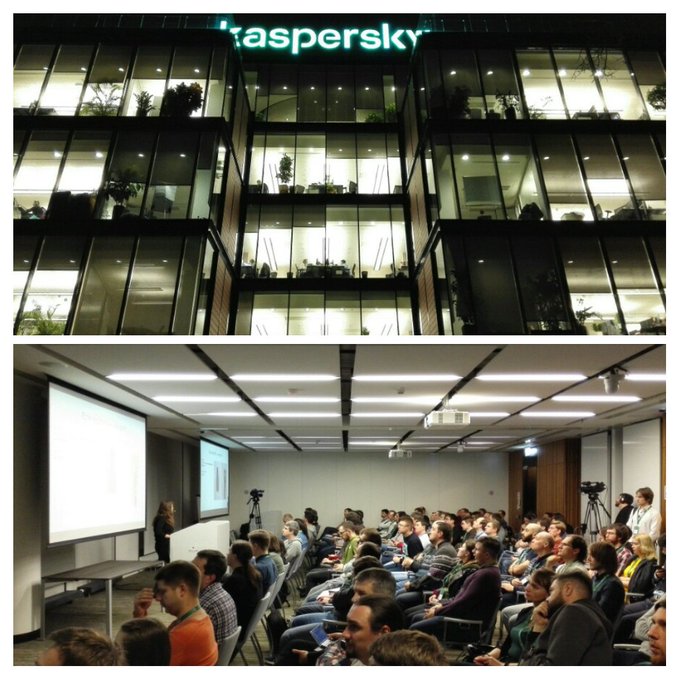
Kaspersky finds zero-day exploit in Windows OS used in targeted attack, part of malicious WizardOpium operation

Kaspersky automated detection technologies have found a Windows zero-day vulnerability. The exploit based on this vulnerability allowed attackers to gain higher privileges on the attacked machine and avoid protection mechanisms in the Google Chrome browser. The newly discovered exploit was used in the malicious WizardOpium operation.

Zero-day vulnerabilities are previously unknown bugs in software, which, if found by criminals first, enable them to operate unnoticed for an extended period of time, inflicting serious and unexpected damage. Regular security solutions do not identify the system infection nor can they protect users from a yet-to-be-recognized threat.


The new Windows vulnerability was found by Kaspersky researchers as a result of a separate zero-day exploit. In Nov 2019, Kaspersky’s Exploit Prevention technology, which is embedded in most of the company’s products, detected a zero-day exploit in Google Chrome. 

This exploit allowed attackers to execute arbitrary code on a victim’s machine. Upon further research of this operation, which the experts called ‘WizardOpium,’ another vulnerability was discovered, this time in Windows OS.


It emerged that the newly discovered Windows zero-day elevation of privileges (EoP) exploit, CVE-2019-1458, was embedded into a previously discovered Google Chrome exploit. It was used to gain higher privileges in the infected machine as well as to escape the Chrome process sandbox – a component built to protect the browser and the victim’s computer from malicious attacks.
  
Detailed analysis of the EoP exploit showed that the abused vulnerability belongs to the win32k.sys driver. The vulnerability could be abused on the latest patched versions of Windows 7 and even on a few builds of Windows 10 (new versions of Windows 10 have not been affected).


“This type of attack requires vast resources. However, it gives significant advantages to the attackers and, as we can see, they are happy to exploit it,” said Anton Ivanov, security expert at Kaspersky. “The number of zero-days in the wild continues to grow and this trend is unlikely to go away. Organizations need to rely on the latest threat intelligence available at hand and have protective technologies that can proactively find unknown threats such as zero-day exploits.”

Friday, December 6, 2019

University of Lausanne adopts Cohesity data management platform to boost time and cost savings, backup flexibility, scalability

Cohesity announced this week implementation of a comprehensive data backup solution for the University of Lausanne, located in Switzerland. Working in tandem with local partner Infoniqa, the solution deployed by the university is significantly faster and more automated and scalable than systems previously used. 

A complete backup of the Microsoft Exchange database now only takes eight hours instead of 29 and the incremental backup can be completed in just under two hours instead of the previous 7.5 hours.


With the new solution, the University of Lausanne is realizing simple, fast backup and disaster recovery on a single platform; easier management through integration with VMware and Avamar; significant time and cost savings in data backup and recovery; and compliance according to DSGVO by encryption of critical data.

With over 15,000 students, 5,000 employees, and two million documents, the university manages around 22 PB of logical data. For this purpose, a second backup solution was set up at the Neuchâtel site. 

As the licences for the existing system expired, the university was looking for a state-of-the-art solution that would meet a number of key requirements: secure critical data in encrypted form, high scalability, efficient recovery of mass data, compatibility with EMC NetWorker and the option of a hybrid cloud solution.

“Cohesity and Infoniqa take a modern and holistic approach to data management,” explains Michel Ruffieux, storage backup manager, University of Lausanne. “It was the only solution that met our requirement to secure critical data in encrypted form using a multi-tenant solution with private keys managed on a KMS server using the KMIP protocol.”


Cohesity and Infoniqa were able to combine the old and new backup systems at the University of Lausanne to cover the entire virtualized environment. Infoniqa enabled the platform to be deployed according to the customer’s requirements. Cohesity supplied four appliances, and additional servers can be added to this space-saving cluster in the future. This appliance group can also be used for storage with the same cluster concept.

With the Cohesity’s SnapTree technology, the university can now access the data in a maximum of three steps. Login takes less than five minutes and full flash recovery takes 11.5 hours. In addition, a web interface facilitates the recovery of a Windows or Linux virtual machine with granular files. This approach to using, managing and backing up secondary and primary data is one of Cohesity’s strengths.

Tuesday, November 12, 2019

StoneFly storage OS software now delivers WORM, deduplication and ransomware protection

StoneFly released a newer version of their patented storage Operating System (OS): StoneFusion and SCVM. The storage software also facilitates cloud integration with StoneFly appliances and other servers. Supported cloud repositories include Azure, Amazon S3, other S3 compatible cloud and StoneFly private cloud.

SCVM is also available as a standalone product compatible with VMware, Hyper-V, KVM, and Citrix (formerly XenServer) hypervisors facilitating data center consolidation, VM migration, VM snapshots, DR, and other similar use-cases.

The latest version (8.0.4) of the enterprise storage software includes WORM (Write-Once, Read-Many) storage provisioning; anti-virus, malware and ransomware detection and removal; deduplication for NAS volumes (in addition to iSCSI SAN workloads); and GUI (Graphical User Interface) update that offers real-time performance reporting of provisioned NAS, SAN and unified storage resources.


StoneFly patented storage OS, StoneFusion and SCVM, enables users to provision NAS, SAN and unified (NAS + SAN) volumes on bare-metal, Windows and Linux servers. The enterprise storage OS comes pre-configured in all StoneFly storage and backup and disaster recovery (DR) appliances.

StoneFusion is also available as a standalone software. The storage OS can be installed on bare-metal servers and mainstream enterprise storage appliances such as Dell EMC, HPE, among several others.
Besides storage provisioning, the storage OS facilitates integration of several enterprise-grade features such as delta-based snapshots, synchronous and asynchronous replication, volume encryption, automated storage tiering, and others.

The SCVM storage OS can be installed on mainstream hypervisors such as VMware, Hyper-V, KVM, and Citrix (formerly XenServers) to provision virtual NAS, virtual SAN, virtual unified (NAS + SAN) storage repositories and/or to integrate desired cloud repositories to build a hybrid HCI storage solution. With SCVM, users can run VMs in their preferred cloud, create snapshots in the cloud, replicate to the cloud, and more.

StoneFly also recently introduced StoneFusion MSP edition, the storage OS version that facilitates MSPs and large organizations to provision virtual, purpose-built, multi-tenant and noise-less storage repositories on on-premises, remote or cloud-based servers. 

Commenting on the new update the CEO and founder of StoneFly Mo Tahmasebi said, “Our culture is driven by customer feedback. We listen to our enterprise customers and develop our solutions accordingly to enhance their experience. The latest version of our storage OS is developed to help with concerns such as high impact ransomware attacks, compliance and data center consolidation. It’s an eighth generation product, which is truly one-of-a-kind in the context that it facilitates NAS, SAN, unified and hyperconverged workloads. Not many storage OS in the market can do that”

StoneFusion comes pre-configured in all StoneFly NAS, SAN and Unified (NAS + SAN) appliances. It’s also available as a standalone product for bare-metal, Windows and Linux-based servers.

SCVM is the built-in virtual storage appliance in StoneFly HCI appliances including Unified Server and Storage (USS) appliances, the DR365, DR365V and DR365U backup and DR appliances.

BittWare expands line with multiple capabilities on FPGA acceleration products to address growing industry technology demands

BittWare, a Molex company, expanded on Tuesday its offerings and solutions to further address the growing need for computing technology. These BittWare offerings provide high-end, integrated solutions for memory bandwidth and advanced cooling, enabling customers to go to market faster.

BittWare’s broad range of compute-focused accelerator cards includes HBM2-enabled FPGAs from both Intel and Xilinx yielding up to 4Tbps of bandwidth. These Stratix-10 MX and Virtex UltraScale+ based products are now shipping with a choice of abstracted toolflows, including OpenCL. 

A new alternative to high-bandwidth memory implementation, on display at SC19, will be BittWare’s new S7t accelerator card developed in conjunction with Achronix Semiconductor. 


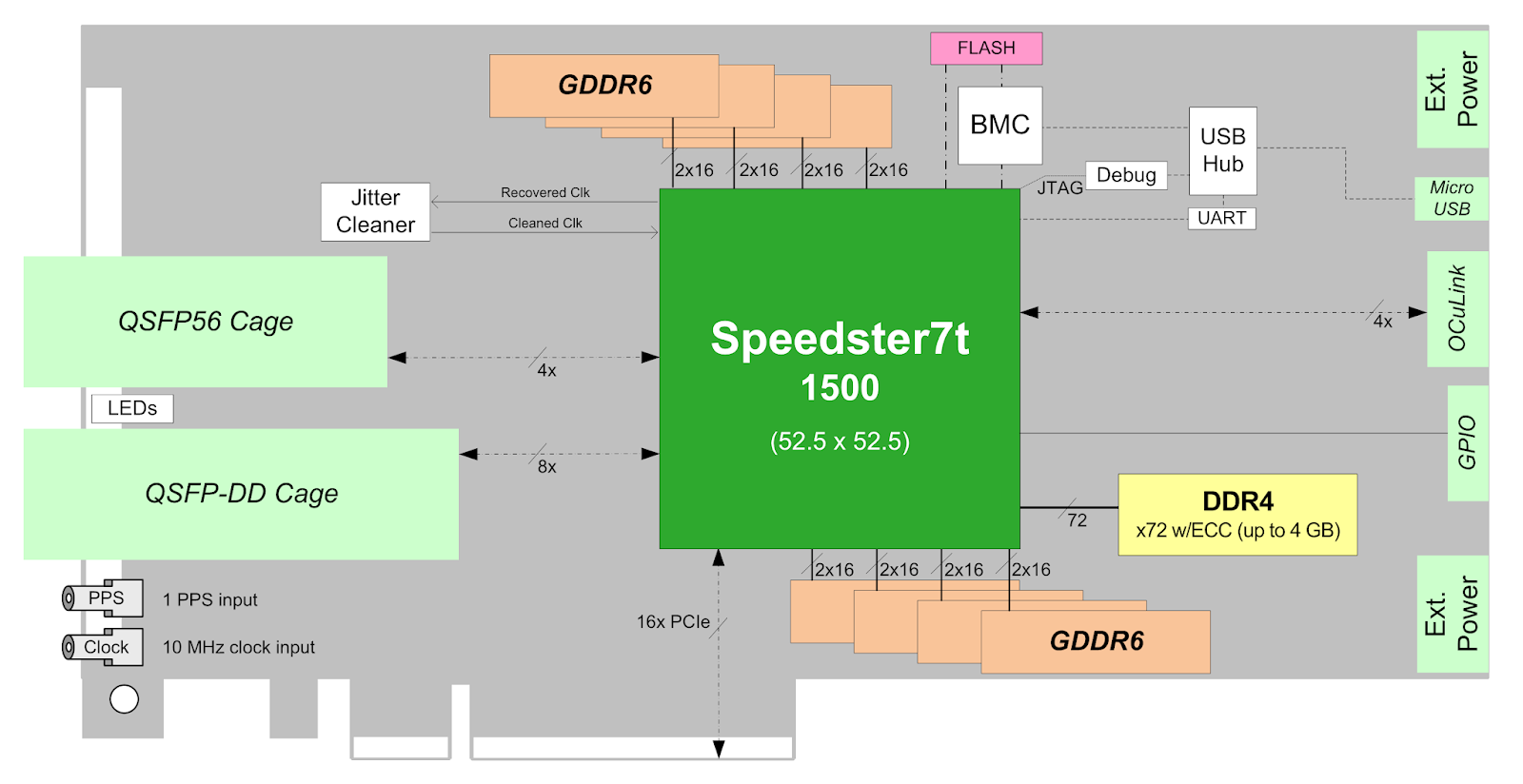
This product features the newly announced Achronix 7nm Speedster 7t FPGA, which offers a range of capabilities, including low-cost and highly flexible GDDR6 memories that deliver HBM-class memory bandwidth without the HBM, as well as a revolutionary 2D Network-on-Chip (NoC) for high bandwidth and energy-efficient data movement.

As customers push computing technology to new limits, there is a need to consider more advanced cooling options – even for energy-efficient accelerators such as FPGAs. At Supercomputing 2019, BittWare will present Achronix, Intel and Xilinx based FPGA accelerator cards featuring Direct Liquid Cooling (DLC) technology from CoolIT System

Data center managers are increasingly turning to liquid cooling as the most reliable and efficient cooling method. In comparison to air, liquid cooling is 2-10 times more effective in transporting heat away from a source to a secondary cooling surface.

BittWare’s range of certified TeraBox server platforms, targeting networking and HPC clusters feature the latest FPGA accelerators enabling customers to develop and deploy quicker, while reducing risk and total cost. This product range will be further extended with the introduction of the TeraBox 1400DN. 

This ultra-high density 1U server based on the DELL C4140 PowerEdge server features four double-width PCIe cards with front-panel access and dual Xeon Scalable CPUs. Customers can order the server with a choice of Achronix, Intel or Xilinx FPGA accelerators supporting a high density of network ports: four 400GbE, up to 128 10/25GbE or up to 32 100GbE.

BittWare, in conjunction with Eideticom, will be displaying the world’s first FPGA-based computational storage processor (CSP). This solution, based on the BittWare 250-U2 accelerator, adheres to the industry standard U.2 form factor allowing it to be front-servicable in standard rackmount chassis. 


When programmed with Eideticom’s NoLoad IP, each Computational Storage Service executed on the 250-U2 is presented to the host operating system as a regular NVMe Controller and binds to the standard NVMe driver. This avoids the need for customers to develop or use proprietary drivers or software stacks. Instead, customers can continue using their preferred Linux, Windows or VMWare operating systems and host-based applications.

“With FPGA-based acceleration achieving wider adoption, it is essential that there is a supplier who can deliver and support higher-quality volume deployments,” said Craig Petrie, vice president of marketing for BittWare. “Traditionally, FPGA card vendors have provided cutting-edge technology primarily to innovators and early adopters; it is quite a different challenge to implement the extensive qualification, validation, life cycle management and support required by the newer enterprise-class customers. BittWare, as a part of Molex, is in the unique position to drive technology advancements while simultaneously delivering enterprise-class product consistently at high run-rates. This powerful combination allows our customers to adopt the latest and greatest FPGAs at the card and server-level with reduced risk and cost.”

Wednesday, October 30, 2019

BittWare, Achronix introduce enterprise-class PCIe accelerator product featuring 7nm Speedster7t FPGA

BittWare, a Molex company, has collaborated with Achronix Semiconductor to introduce the S7t-VG6 PCIe accelerator product—a feature-rich PCIe card sporting the new Achronix 7nm Speedster7t FPGA. 

This next generation product offers a range of breakthrough capabilities including low-cost and highly flexible GDDR6 memories that offer HBM-class memory bandwidth, high-performance machine learning processors and a revolutionary 2D network-on-chip for high bandwidth and energy-efficient data movement.


The S7t-VG6 offers a 7nm Achronix FPGA that is optimized for high-speed networking and fast, high-capacity memory access. Featuring a QSFP-DD (double-density) cage, the board supports up to 1x 400GbE or 4x 100GbE using the 56G PAM4-enabled Speedster 7t device. 

An additional QSFP port supports 2x 100GbE, and a 4x OCuLink connector supports NVMe attached storage. Sixteen channels of GDDR6 graphics DRAM handle high-bandwidth memory requirements, providing up to 512GB/s.


The BittWare VectorPath accelerator card is designed for high-performance and high-bandwidth data applications and features 1x400GbE and 2x100GbE interfaces; 8 banks of GDDR6 memory with 4 Tbps aggregate bandwidth; 20 Tbps 2D Network-on-Chip (NoC); 1 bank of DDR4 running at 2666MHz with ECC; PCIe compliance and certification; and 692K 6-input LUTs.


This enterprise-class product leverages BittWare’s extensive experience designing, qualifying, deploying and supporting accelerator cards. Its features include choice of thermal cooling options: passive, active or liquid; comprehensive Board Management Controller (BMC); support for Linux and Windows operating systems; developer toolkit: API, PCIe drivers, application example designs and diagnostic self-test; and option to purchase the S7t pre-integrated as a DELL or HPE server from BittWare TeraBox range.

The initial S7t-VG6 shipments are scheduled to begin by the second quarter of next year. 

Masimo secures FDA clearance for neonatal RD SET Pulse Oximetry sensors with improved accuracy specifications

Masimo announced that RD SET sensors with Masimo Measure-through Motion and Low Perfusion SET pulse oximetry have received FDA clearance ...