Showing posts with label engineering. Show all posts

Friday, December 20, 2019

Commvault data protection software now fully tested and validated to support AWS Outposts

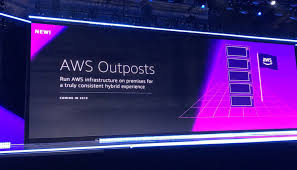
Commvault announced on Thursday that Commvault software has been tested and validated to support AWS Outposts, which is a new, fully-managed service that extends Amazon Web Services (AWS) infrastructure, services, APIs and tools to virtually any data center, co-location space, or on-premises facility for a truly consistent hybrid cloud experience.

Many customers need to keep certain workloads on-premises while managing other workloads in the cloud. Commvault has robust and expansive support for the ever-growing number of diverse workloads rapidly migrating to AWS from other platforms and delivers the same look, feel and performance for data protection and management on-premises as it does in the cloud. 


As a complement to AWS Outposts, Commvault’s software provides a true single solution, not just a single interface, which creates cost efficiencies, provides simplicity and reduces risk.

Commvault is an Advanced Technology Partner in the AWS Partner Network (APN) and holds AWS Storage Competency status. Working with the AWS engineering team allows Commvault to offer integrated cloud storage solutions and support, giving customers the ability to migrate, backup and store data in the cloud. The depth and breadth of Commvault’s software with the wide array of storage services available from AWS allows customers to rest assured that their data is secure and available in the cloud. 


“Our tested and validated support for AWS Outposts allows our customers to leverage Commvault’s powerful cloud data protection and management capabilities on AWS,” said Karen Falcone, Vice President of Worldwide Cloud GTM, Commvault. “With the growth of cloud services and so many Commvault customers moving into AWS, we are helping organizations achieve the same level of data protection in the cloud as they did on-premises without the complexity and costs of installing and managing infrastructure.”


In October, Commvault announced product and experience enhancements to Commvault Activate, its data insights and governance solution that gives users greater visibility into their data, identifies opportunities for storage efficiencies and manages risk. Enhancements include the addition of file access controls for file storage optimization and new redaction functions with sensitive data governance. 

Tuesday, December 3, 2019

Ericsson Spectrum Sharing milestone links up continents, 5G live networks and 5G devices

The move toward commercial Ericsson Spectrum Sharing continues to gather pace with a 5G smartphone from Chinese manufacturer OPPO now added to its 5G ecosystem and successfully tested with a transglobal 5G data call in live commercial 5G networks. 

Ecosystem industry players Qualcomm Technologies, a subsidiary of Qualcomm Inc., Swisscom, and Telstra also played vital roles in the achievement, which underlined the value of dynamic spectrum sharing to the industry.


The November 29 data-call-first connected Bern, Switzerland and Gold Coast, Australia, with Ericsson Spectrum Sharing deployed in Swisscom and Telstra’s commercial 5G networks at the respective sites. The call was achieved using spectrum sharing on a 3GPP Frequency Division Duplex (FDD) band. 

Pre-commercial 5G smartphones from OPPO, powered by the Qualcomm Snapdragon X55 5G Modem-RF System, were used on both ends of the call. OPPO is the first 5G device manufacturer to implement Ericsson Spectrum Sharing in its smartphones.  

The data call success validates the support for Ericsson Spectrum Sharing across its 5G ecosystem, from chipsets to 5G devices, and communication service providers’ network products and solutions. The strengthening of the ecosystem is also a step towards the commercial introduction of Ericsson Spectrum Sharing.

Ericsson Spectrum Sharing, part of Ericsson Radio System, is a complete dynamic spectrum sharing solution based on the 3GPP standard with additional intelligent scheduler algorithms. This allows the deployment of both 4G and 5G in the same band through a software upgrade, and dynamically allocates spectrum based on user demand. The switch between 4G and 5G carriers happens within milliseconds, minimizing spectrum wastage and enabling best user performance.


This Ericsson innovation will enable service providers to launch 5G services over a wide area and expand 5G coverage in a tailored way by re-using existing network infrastructure and taking advantage of previous spectrum investments. Communication service providers can therefore provide 5G commercial services and move towards standalone (SA) 5G without the need for blanket costly re-investment.


“This industry-first highlights the value that Ericsson Spectrum Sharing has to communication service providers as they roll-out and ramp-up 5G. With this milestone achieved with our 5G ecosystem partners OPPO, Qualcomm Technologies, and customers Swisscom and Telstra, we’ve shown that our unique solution will not only enable service providers to re-use their 4G spectrum assets for 5G but that it will also support all 5G devices,” said Fredrik Jejdling, executive vice president and head of networks, Ericsson. “It is the most economically feasible way to launch 5G on existing bands, enabling nationwide 5G coverage and helping make 5G accessible around the world.” 

“As a leading global tech company, OPPO proactively works to accelerate large-scale commercialization of 5G. Our cooperation with Ericsson, Qualcomm, Swisscom and Telstra to facilitate the commercial use of Dynamic Spectrum Sharing (DSS) technology is part of the in-depth collaborations among the five companies in the 5G era,” said Andy Wu, vice president and president of software engineering business unit, OPPO. “The 5G smartphones that support this technology will provide more stable, seamless, and speedy connections, and hence a better user experience in the future.”

“Coverage is the next 5G killer app and this is another significant milestone and steps towards ubiquitous 5G coverage,” said Enrico Salvatori, senior vice president and vice president, Qualcomm EMEA. “Dynamic spectrum sharing will bring key benefits to operators and consumers globally and our second-generation Snapdragon X55 5G Modem RF System is a comprehensive solution designed to allow OEMs to rapidly develop global 5G multimode devices for a new era of connected experiences.”


“This latest collaboration of industry partners is paving the way for the faster rollout of 5G by using existing spectrum holdings to serve the needs of 4G and 5G customers in the same location at the same time,” said Channa Seneviratne, Network and Engineering Infrastructure Executive, Telstra. “This collective implementation is yet another innovative example of how 5G technology continues to advance in a rapid fashion, and at Telstra we are pleased to bring that latest technology to Australians first.”
Ericsson has achieved multiple 5G landmarks with all the partners involved in the latest achievement.

Swisscom, with Ericsson as its sole 5G vendor, was the first communications service provider in Europe to launch commercial 5G services in April 2019 on the 3.6 GHz band. Swisscom is targeting 90 percent population coverage by the end of this year.

Telstra, with Ericsson as a key network partner, went live with 5G commercial services and four 5G devices in May 2019 on the 3.6 GHz band. Telstra now offers six 5G devices, and has some 5G sites in 25 metro and regional cities around Australia, with another 10 cities to be added by 30 June 2020.

Monday, December 2, 2019

Ericsson’s Cloud Packet Core strengthens SK Telecom’s 5G network; improves network performance, user experience

Ericsson was selected to deliver a Cloud Packet Core for SK Telecom’s 5G network. Ericsson’s Cloud Packet Core, part of the company’s Cloud Core portfolio, helps service providers to smoothly migrate to 5G Core (5GC) stand-alone architecture.


Ericsson’s Cloud Packet Core is at the business end of mobile broadband and IoT networks. It creates value, visibility and control of traffic and applications by determining the optimal quality of a service, then enforcing it through appropriate policy.


Building on virtual Evolved Packet Core (EPC) applications, Ericsson is dedicated to supporting customers on a smooth evolution from EPC to dual mode core operations, 5G EPC and 5GC. The company offers flexibility, fast time to market and efficiency in operations. 

On the way, Ericsson Cloud Packet Core - which supports over 100 commercial virtual EPC customer networks - provides a variety of use cases. Some of these are brand-new and are enabled by this new technology, while others are currently evolving use cases with a new level of automation and speed. 


Modernizing and managing capacity growth, adding sites, and migrating to datacenters. From complete virtual EPC and user management deployed in a single COTS server for thousands of users to traditional large-scale MBB operations with more than 10 million subscribers in tier 1 carriers.


The Cloud Packet Core portfolio supports network slicing already in 4G. This allows for multiple logical networks to be created on top of a commonly shared physical infrastructure and acts as a step towards a 5G Core architecture. 


The network evolution from EPC to 5G core plays a central role in creating a powerful network platform that is capable of being exposed and automated for service providers. This means service providers extract more value and become contributors to existing and emerging ecosystems. 


“By utilizing Ericsson’s Cloud Packet Core network solution, which realizes simplified network operations, we will unleash the full potential of new 5G-enabled use cases with greater efficiency,” said Jung Chang-kwan, vice president and head of infra engineering group, SK Telecom.


“This deal, and the opportunity to work with SK Telecom’s Network Functions Virtualization Infrastructure (NFVI), has put us in the ideal position to further strengthen their 5G network,” said Jan Karlsson, senior vice president and head of digital services, Ericsson. “Delivering our Cloud Packet Core solution will positively impact SK Telecom’s network operations and will reinforce Ericsson’s position as a leader in 5G core.”


SK Telecom switched on its commercial 5G network in December 2018 after selecting Ericsson as one of its primary 5G vendors. Previously, Ericsson provided radio access network (RAN) products, including mid-band massive MIMO.

Tuesday, November 12, 2019

ATP A600Si/A600Sc SATA SSDs deliver MCU design for enhanced power management and PLP capabilities

ATP Electronics unveiled Tuesday its next-generation A600Si and A600Sc Serial ATA solid state drives (SATA SSDs) featuring a completely new design of the power loss protection (PLP) array, which utilizes a new power management IC (PMIC) and new firmware-programmable MCU (microcontroller unit). 

Integrated into its latest PLP technology, ATP PowerProtector 4, the new MCU design allows the PLP array to perform intelligently in various temperatures, power glitches and charge states.


ATP SATA SSDs with the new PowerProtector 4 MCU-based design provide enhanced device protection that suppresses power-up inrush current according to customer request and input over-voltage protection to prevent damage to the SSD circuitry. It delivers improved data integrity using input power noise de-glitch to prevent incorrect cache flushing caused by false triggers such as noisy or unstable host input voltage, and under-charge/over-charge protection for hold-up power capacitors.


It also provides fast power on/off control that cuts time required from power-off to re-power on the SSD;  precise control of reset signal generation and power up/down sequences prevents potential issues in the power up/down of the SSD; and industrial operating temperature support ensures reliable operation in extreme environments from ‑40°C to 85°C. 

As components perform and react differently in severely cold or hot scenarios, ATP PowerProtector 4 ensures reliable PLP capacitance in all states of cold start, hot temperature workload, and cross temperature.


With this line of SSDs, users get access to RAID support that ensures redundancy and fault tolerance to prevent data loss in the event of a drive failure; end-to-end data protection prevents unauthorized access to data while it is being transferred from one storage device to another; and customization options, as the new MCU-based design allows PLP capabilities to be tailor-fitted according to unique customer requirements, application-specific needs, or use cases.


"Superior power loss protection is essential in any embedded/industrial application. But not all PLPs are equal," said Marco Mezger, ATP vice president of global marketing. "By implementing this type of MCU design, we are able to showcase our engineering expertise and nearly 30-year experience in the design and manufacture of storage devices for wide temperature environments, particularly for compact form factors in embedded/industrial applications. We continue to blaze the trail, as we were also the first to design and release smaller form factor SSDs such as eUSB and M.2 2242 with an onboard PLP array."

The next-generation ATP SATA SSDs with the new MCU-based design include mSATA, 2.5-inch SSDs and M.2 2242/2280 modules. Available with I-Temp (A600Si) and C-Temp (A600Sc) support, the SSDs come in the following capacities — M.2 2280: 120 to 960 GB; M.2 2242 and mSATA: 120 to 480 GB; 2.5": 120 GB to 1.92 TB.

Thursday, November 7, 2019

Rackspace gives boost to its managed cloud services segment with Onica acquisition

Rackspace announced that it has agreed to acquire Onica, an Amazon Web Services (AWS) Partner Network (APN) Premier Consulting Partner and AWS Managed Service Provider. This acquisition brings Onica’s professional services capabilities – including strategic advisory, architecture and engineering and application development – to the Rackspace portfolio, complementing its existing managed cloud services capabilities. Terms of the transaction were not disclosed.


Founded in 2014 and headquartered in Santa Monica, California, Onica has rapidly grown to more than 350 highly-skilled consultants across North America. 


The company holds nine AWS competencies across Data and Analytics, DevOps, Education, Healthcare, Industrial Software, IoT, Microsoft Workloads, Migration and Storage. Onica has been a regular on Inc. Magazine’s Best Workplaces list and ranked fifth on the CRN® Fast Growth 150 list. 


As a cloud-native services company, Onica helps customers build new revenue streams, increase efficiency and deliver incredible experiences by bringing the innovative capabilities of the cloud to some of the most complex technology projects in the world.


“As a cloud pioneer, Onica has established itself as one of the largest pure-play AWS consultancies, with an unmatched reputation for true capability leadership with AWS and customers,” said Kevin Jones, CEO of Rackspace. “This acquisition will strengthen our ability to meet all of our customer needs on AWS, and together, we will have the most complete set of professional services and managed service capabilities in the industry. Rackspace is known for providing Fanatical Experience™ to its customers and Onica’s customer-first mindset is a natural culture fit. We are thrilled to welcome Stephen, Tolga and the talented Onica team to the Racker family.”


The demand for professional services for public cloud is rapidly growing and customers are continuing to adopt advanced cloud solutions. The acquisition of Onica will enhance and extend Rackspace’s offering to customers who are quickly maturing on AWS and seeking high-end professional services spanning the full spectrum of expertise in the cloud.


“By combining our capabilities with Rackspace’s global presence, resources and scale, we will be better positioned to achieve our mission of helping customers innovate using AWS,” said Stephen Garden, CEO of Onica. “We pride ourselves on delivering results for customers, and in Rackspace we have found a partner that shares our passion for providing a customer-obsessed experience.”


The transaction is expected to close in late fourth quarter of 2019. Garden and Onica chief technology officer Tolga Tarhan will continue to lead the Onica team, reporting to Sid Nair, general manager of Americas at Rackspace.


Both companies are privately held, with Rackspace owned by affiliates of certain funds of Apollo Global Management LLC and certain co-investors. Onica is a portfolio company of Sunstone Partners. Evercore acted as sole financial advisor to Rackspace on the transaction. Barclays acted as sole financial advisor to Onica.

Carousel joins RingCentral’s Platinum Partner program; delivers cloud contact center and UC&C engineering capabilities

Carousel Industries announced on Wednesday that it has been named a Platinum Partner by RingCentral Inc.. A designation held by RingCentral’s partners, Carousel’s Platinum Partner status is a testament to the company’s engineering talent, services capabilities, and commitment to customer success.

Carousel customers will benefit deeply from this elevated status. The company will receive operational and technical resources and executive-level RingCentral support only made available through this Platinum Partner status. Combined with Carousel’s Net Promoter Score of 70 and unwavering pursuit of success, customers can now take advantage of an entire portfolio of solutions with the best in high touch services and support. 


Additionally, with a rich history of partnership with Avaya as a Diamond Partner, and now a RingCentral Platinum Partner, Carousel is well positioned to support all possible paths to cloud migration, and is well versed in cultivating migration strategies tailored to the individual and changing needs of the customer.


“Serving as a RingCentral Platinum Partner is evidence of Carousel’s rigorous customer success standards and technical expertise,” said Rick Houlihan, VP of Cloud Services, Carousel. “It is our honor to continue being a RingCentral preferred partner and bring cloud UC&C and contact center technology to our more than 6,000 enterprise customers who benefit from our services each and every day.”

“We’ve consistently looked at Carousel as a strong leader in delivering cloud technology solutions thanks in part to its engineering expertise and ability to exceed customer needs,” said Zane Long, SVP of Global Channel Sales, RingCentral. “On behalf of all of us at RingCentral, I am ecstatic to continue partnering with Carousel to help enterprises benefit from the power of the cloud to deliver true impact to their businesses.”


“Due to the newly formed strategic partnership between RingCentral and Avaya, Carousel is in a truly unique position to serve businesses,” continued Houlihan. “As Avaya’s U.S. Partner of the Year and now as a Platinum Partner in RingCentral’s Program, Carousel can help businesses navigate and gain incredible value from two of the leading cloud communications solutions providers in the world.”

Thursday, October 31, 2019

Nasuni announces latest release of its file services platform for modernizing NAS infrastructure

Nasuni Corp. announced Wednesday latest release of its file services platform for modernizing network attached storage (NAS) infrastructure. Nasuni’s new version gives enterprises access to artificial intelligence (AI) and search analytics for unstructured data, as well as powerful cloud migration capabilities. Companies gain a springboard for agile, intelligent migrations and cloud-first approaches, as well multi-cloud flexibility. 

Unstructured data has exploded, while globalization and agility pressures have made traditional NAS infrastructures inadequate. Businesses should no longer build file server silos, which can be costly, complex and unable to keep up with prevailing demands. 

Powered by file system, Nasuni delivers a file services platform built for the cloud that combines performance of local file servers with the scalability and durability of cloud storage, at roughly half the cost of traditional file infrastructures. 


The Nasuni Analytics Connector allows customers to turn unstructured data into big data. A consolidated cloud-based file system enables customers to export a temporary second copy of their file data to use with analytics software, AI, machine learning and other data recognition tools such as AWS Rekognition and Macie. This new release also features support for leading search software, including SharePoint Search, Acronis FilesConnect, Cloudtenna, Search Blox, Graymeta, and NeoFinder.

Customers can start their journey from traditional on-premises NAS to the cloud with the Nasuni AWS Cloud Migration Services and Nasuni Azure Cloud Migration Services. Nasuni’s services for AWS now include both Amazon Snowball and the Nasuni Cloud Migrator for AWS. Nasuni’s services for Azure now include Microsoft’s Data Box and Nasuni’s Cloud Migrator for Azure. These new services enable customers to seamlessly move data to Amazon S3 or Microsoft Azure storage faster and with less effort than a self-driven cloud migration, enabling a successful cloud-first strategy.

In addition to support for AWS and Azure, new support for Google Cloud Storage extends Nasuni’s public cloud storage capabilities to all three major public cloud providers, enabling customers to implement multi-cloud strategies based on their specific business or application requirements. This new release now supports more private cloud storage solutions, including NetApp StorageGRID, Nutanix Objects, IBM COS, Hitachi Vantara HCP, and Scality RING.


Users can migrate NAS silos to the cloud storage of their choice for on-demand capacity expansion, built-in backup, instant disaster recovery, and multi-site file sharing. They also gain sophisticated data insights and accelerate their cloud storage strategies with Nasuni’s ability to scale and foster collaboration across distributed workforces.

Nasuni enables enterprises to seamlessly navigate their entire journey from NAS consolidation to workforce productivity. The Nasuni platform is trusted by many of the largest organizations in retail, consumer goods, creative services, oil and gas, architecture, engineering, construction and manufacturing. The company is experiencing record growth, with a 250 percent increase in data under management over the last 24 months. 


Nasuni is now deployed in more than 7,000 locations in 70 countries. Nasuni’s growth reflects its customers’ needs to simplify how critical file data is stored and protected, while empowering users to share and collaborate on files across multiple sites and geographies with maximum performance and reliability.

Nasuni’s new enhancements will be available by the end of the year. The Nasuni platform comes in three editions -- Essentials, Advanced and Premium.

Masimo secures FDA clearance for neonatal RD SET Pulse Oximetry sensors with improved accuracy specifications

Masimo announced that RD SET sensors with Masimo Measure-through Motion and Low Perfusion SET pulse oximetry have received FDA clearance ...