Showing posts with label management. Show all posts

Saturday, December 28, 2019

Centilytics releases initial cloud management platform to debut flat fees and widget-based pricing

In the cloud management industry, Centilytics becomes the initial management platform that offers widget-based pricing. With cloud computing having almost limitless benefits, cloud vendors deliver benefits to attract customers; and this strategy is working quite well. Cloud computing is becoming a preferred choice by entrepreneurs, whether for a startup or a well-established enterprise.

It was all a walk in the park up until the first data breach, or an unexpected cloud bill that can shrink the numbers in the bank account, ergo the dawn of cloud management. 


Gartner was the initial vendor to advocate the importance of a cloud management platform. They acknowledge that a management platform is needed to see through the complexities of the cloud. It should be equipped to protect the user's data under industry defined regulations and provide solutions for any additional cost overhead.

Centilytics is a fully-automated SaaS solution that helps organizations with the management and control of their infrastructure. It is an intelligent cloud management platform that enables public cloud users to gain 360-degree visibility, identify loopholes and deploy one-click fixes on their cloud infrastructure.

Cloud Management Platforms (CMP) can safeguard the data and prevent cost leakages from the accounts. Typically, a CMP charges a percentage fee on the cloud consumption; In other words, that's a part of savings.
Which seems to be a conflict of interest, doesn't it?

On a percentage pricing model, the CMP's revenue becomes directly proportional to cloud spending. It means they'll earn more when the cloud bill increases. This conflict has been generalized and never been visible because users have gotten used to it. Cloud already has a complex pricing model, and in no way, percent pricing going to ease that complexity. When Centilytics, noticed this conflict, it went ahead. It introduced a flat fee model for its customers.


Centilytics is the only CMP that eradicates the conflict of interest by charging one fixed amount, which is independent of increased bills.
The users have finally understood the conflict and are now moving away from the percentage pricing. Not only did the previous pricing take away a chunk of there savings but also that they had to pay for the whole platform, even for the services that they were not using.

Centilytics, yet again, disrupt the market by introducing a widget-based pricing model. To offer this pricing, The entire Centilytics platform was broken down to 5 products, 12 services, and 2200+ widgets. With widget-based pricing, the users can pick and choose only those services which they require. They also get the capability to bundle widgets as per their unique infrastructure requirements. This model eliminates the need to pay for the entire platform and genuinely save money.

Tuesday, December 24, 2019

CloudJumper launches distribution agreement with Crayon to improve access to cloud workspace for Azure

CloudJumper announces alliance with Crayon that combines the power of CloudJumper’s Cloud Workspace Management Suite (CWMS) for VDI and RDS workloads with the expertise of Crayon’s managed services and independent 'cloud economics' consulting practice.

CloudJumper and Crayon’s partnership bring new possibilities for customers and MSPs who want the flexibility of choice for management, security options and the ability to build their own value-add services suite leveraging WVD. 


Microsoft’s Windows Virtual Desktop (WVD) brings new choices for customers who want more control of the managed services running on top of desktop and application virtualization solutions. Legacy VDI providers have historically served as a gatekeepers controlling the workstation management plane. CloudJumper brings to Azure WVD what the legacy vendors will not – the flexibility of controlling managed services on top of managed desktops.

The utility of Windows Virtual Desktop (WVD) is further enhanced through CloudJumper's Cloud Workspace Management Suite (CWMS). CWMS is an automation, orchestration workflow and policy solution to deploy, configure and manage WVD in real-time and at cloud scale. CWMS will instantly, and continually, optimize the customer’s Azure investment.


WVD is a complex collection of Azure services. CloudJumper simply funnels the hundreds of WVD setup options into a few key questions and then orchestrates and deploys a customized environment. With CloudJumper, the customer is just minutes away from deploying thousands of new WVD VMs– something that is not available in a native Azure user interface (UI).

To provide additional support for this distribution partnership, CloudJumper's product development team has been working closely with Microsoft's WVD product team for over two years. As a result, CloudJumper is proud to be recognized as a Microsoft Preferred Solution Provider for WVD.

Microsoft Azure WVD provides customers with unique licensing options and operating system flexibility for Windows 10 and Windows 7 desktop virtualization. Windows 7 desktops can now be migrated to Azure WVD and receive up to three years extended security updates at no additional costs. 

New Windows 10 multi-session OS options are only offered in Azure. These OS choices along with the many complementary Azure PaaS management and security offerings can be securely delivered directly into the Azure tenant. Native Azure Management, supported by CWMS, means no redirection and no third party vendor lock-in. This allows customers to leverage current Microsoft licensing instead of buying overlapping third party tools.

The partnership with Crayon combines the strengths and expertise of CloudJumper and Crayon to deliver the next generation of cloud DaaS and WaaS VDI and RDS desktop and application virtualization solutions.


Headquartered in Oslo, Norway, Crayon is in over 35 countries, providing more than 8,000 customers with strategic advice, consulting and managed services, and support with complex IT estates. Crayon has been the preeminent IT infrastructure consulting business in the Nordic region for more than 12 years, and has expanded its footprint in the US in the last two years.

“Crayon’s deep experience in all aspects of the digitalization journey helps ensure the success of the new partnership. We are pleased to combine CloudJumper’s advanced platform with Crayon’s unique SAM to Cloud Consultancy Services as companies take the next step in digital transformation with their move to Windows Virtual Desktop,” said Alex Picchietti, global director of cloud services for Crayon. “The wealth of expertise from both companies will support organizations making this important move to improve productivity and operational efficiency.”

“The advent of WVD and the partnership with a respected industry leader like Crayon extends the reach of our combined solutions globally,” said JD Helms, president of CloudJumper. “Customers are demanding choice and flexibility in their managed workspace providers and CloudJumper is uniquely positioned to do just that.”

Friday, December 20, 2019

Commvault data protection software now fully tested and validated to support AWS Outposts

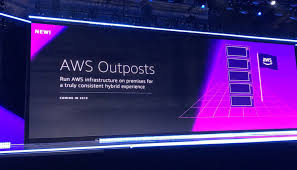
Commvault announced on Thursday that Commvault software has been tested and validated to support AWS Outposts, which is a new, fully-managed service that extends Amazon Web Services (AWS) infrastructure, services, APIs and tools to virtually any data center, co-location space, or on-premises facility for a truly consistent hybrid cloud experience.

Many customers need to keep certain workloads on-premises while managing other workloads in the cloud. Commvault has robust and expansive support for the ever-growing number of diverse workloads rapidly migrating to AWS from other platforms and delivers the same look, feel and performance for data protection and management on-premises as it does in the cloud. 


As a complement to AWS Outposts, Commvault’s software provides a true single solution, not just a single interface, which creates cost efficiencies, provides simplicity and reduces risk.

Commvault is an Advanced Technology Partner in the AWS Partner Network (APN) and holds AWS Storage Competency status. Working with the AWS engineering team allows Commvault to offer integrated cloud storage solutions and support, giving customers the ability to migrate, backup and store data in the cloud. The depth and breadth of Commvault’s software with the wide array of storage services available from AWS allows customers to rest assured that their data is secure and available in the cloud. 


“Our tested and validated support for AWS Outposts allows our customers to leverage Commvault’s powerful cloud data protection and management capabilities on AWS,” said Karen Falcone, Vice President of Worldwide Cloud GTM, Commvault. “With the growth of cloud services and so many Commvault customers moving into AWS, we are helping organizations achieve the same level of data protection in the cloud as they did on-premises without the complexity and costs of installing and managing infrastructure.”


In October, Commvault announced product and experience enhancements to Commvault Activate, its data insights and governance solution that gives users greater visibility into their data, identifies opportunities for storage efficiencies and manages risk. Enhancements include the addition of file access controls for file storage optimization and new redaction functions with sensitive data governance. 

Thursday, December 19, 2019

Ericsson and Telstra achieve container-based commercial Evolved Packet Core milestone

Ericsson and Australian communications service provider Telstra have deployed the industry’s first live cloud-native container-based Evolved Packet Core for 4G and 5G services. The achievement is a significant milestone in network orchestration and automation.
The cloud-native container-based Evolved Packet Core has been deployed in Telstra’s production Network Functions Virtualization Infrastructure (NFVi), provided by Ericsson. It is fully integrated into Telstra’s mobile core network and is carrying live 4G and 5G Non-Standalone (NSA) traffic.

Telstra’s cloud-native Evolved Packet Core includes Ericsson Packet Core Controller and Ericsson Packet Core Gateway products. They support 4G and 5G Non-standalone (NSA) control and user plane functions in both a centralized configuration and edge-breakout configurations.
As part of this deployment, Ericsson’s Packet Core Controller is deployed as a cloud-native container-based Mobility Management Entity (MME) in an existing MME pool.
Both the Ericsson Packet Core Controller and Packet Core gateway are designed from the ground up to be fully cloud-native container-based solutions. They run on Ericsson’s Cloud Container Distribution (CCD) that is part of Ericsson’s NFVI solution or on other Cloud Native Computing Foundation (CNCF) aligned distributions.
Ericsson CCD provides container management and orchestration for the latest Ericsson cloud native applications. CCD can be run on bare metal or within a Virtual Machine in an OpenStack deployment.
Ericsson and Telstra have a long history of partnering in industry innovation. In May 2019 Telstra launched 5G commercial services using Ericsson solutions.  
This achievement is a key step in Telstra’s goal to build a web-scale core network and deliver the full power of 5G to consumers and enterprise customers. The containerization of core network functions will move communication service providers such as Telstra towards greater orchestration and automation of their networks. This in turn will help them to create and deliver new services such as enhanced mobile broadband, network slicing, mobile edge computing, mission critical vertical industry support and advanced enterprise services.
Containerized technologies are also designed to improve network resilience and software upgrade techniques to increase overall network availability for Telstra’s customers and services.
“Telstra and Ericsson are leading the mobile industry with this first container-based cloud-native Evolved Packet Core in Telstra’s production environment and carrying live traffic. This is an important step towards fundamentally changing the way both companies deploy and operate mobile core networks,” said Emilio Romeo, head of Ericsson Australia and New Zealand. “Core networks will become much more flexible and agile, allowing operators such as Telstra to quickly create and deploy compelling new services for their customers. This in turn helps operators build new revenues.”
“Through the T22 initiative, Telstra’s business is being transformed to improve service delivery and provide customers with enhanced experiences. To achieve this transformation, Telstra’s network needs to become more flexible and efficient, and cloud-native container-based applications such as Ericsson’s containerized Evolved Packet Core are a key element of this,” said Shailin Sehgal, product enablement technology executive, Telstra. “This is key to cost effectively scaling and automating our network and speeding up the delivery of innovative new services that are essential in a 5G world. We are pleased to be working with Ericsson to deliver innovation into our network that will assist Telstra maintain its industry leadership.”

Schneider Electric releases its initial integrated rack with immersed, liquid-cooled IT for data centers

Schneider Electric, vendor of digital transformation of energy management and automation, with Avnet and Iceotope, announces creation of commercially-available integrated rack with chassis-based, immersive liquid cooling. Optimized for compute-intensive applications, the solution combines a high-powered GPU server with Iceotope’s liquid cooling technology to increase energy efficiency. 


Avnet integrates the liquid-cooled server with Schneider Electric’s NetShelter liquid-cooled enclosure system for simple deployment into data centers or edge computing environments. The system is EcoStruxure Ready since the solution is available with next generation data center management software, EcoStruxure IT Expert and our digital service EcoStruxure Asset Advisor

This liquid-cooled solution is ideal for applications such as big data analytics, artificial intelligence, and machine-learning algorithm training development, where high compute demands more energy use. In a recent report published by Gartner, liquid cooling was identified as a technology to watch. 

Analyst Henrique Cecci advised data center operators “maximize cooling energy efficiencies by employing modern liquid cooling solutions.” Liquid cooling offers greater efficiency, lower operating costs, smaller footprint, increased reliability, and nearly silent operation despite the high-power density of the GPUs. 


Avnet, Iceotope and Schneider Electric plan to expand the offering as demand grows by welcoming other server OEMs into the partnership. 

“Schneider Electric is committed to making data centers more sustainable and liquid cooling is a very compelling approach,” said Kevin Brown, CTO and SVP of Innovation, Secure Power, Schneider Electric, who is presenting on liquid cooling at the Gartner conference. “This latest development marks a significant step toward industrializing chassis-based immersion solutions which offer the efficiency and effectiveness of tanks based solutions while providing the compatibility and serviceability of more traditional, ‘direct-to-chip’ liquid-cooling designs. Given the growth of compute-intensive applications, we believe this approach is very promising.”

“As a leading global technology solutions provider, Avnet has always excelled at adapting to changing markets, trends, and technologies,” said Scott MacDonald, global president, Avnet Integrated. “We do well at this by partnering with the world’s best technology designers and hardware manufacturers. In this case, we’re partnering with liquid cooling-specialist, Iceotope, and global infrastructure giant, Schneider Electric, to make the best possible liquid cooling solutions for our customers. We’re excited to integrate, fulfill, and support this solution that smartly addresses customer cooling challenges around rising chip densities, harsh IT environments, rising energy costs, water use restrictions, and space constraints.”


“Iceotope is thrilled to be making its innovative chassis-level, immersive liquid cooling technology available to the general market,” said David Craig, CEO of Iceotope. “We offer the only liquid cooling tech that scales easily from edge computing devices to large server farms in the cloud. And compared to direct-to-chip liquid cooling systems, our approach is more efficient, more reliable, saves more space, eliminates fans, and when deployed across the data center, it lowers cost.”

Saturday, December 14, 2019

Pivot3 improves resilience for large-scale HCI deployments with AI and automation capabilities

Pivot3 announced addition of  artificial intelligence (AI) and automation features to its Acuity software to address the data protection challenges often faced in large-scale hyperconverged infrastructure (HCI) deployments. These capabilities provide resilience for large multi-petabyte environments, allowing customers who experience catastrophic hardware failures to recover, while ensuring high-availability with auto-healing, quick node rebuild and intelligent monitoring and analytics.


At the core of Pivot3's Acuity software platform is the Pivot3 Intelligence Engine. The Intelligence Engine comprises many advanced data- and performance-management capabilities, including its market leading Business Policy Management feature. This enables customers to map business objectives to resource management through simple policies. 

Pivot3 uses AI and machine learning to understand application performance, protection and security requirements and to make real-time system changes so SLAs are met. The Intelligence Engine also monitors system health and performs predictive maintenance to ensure maximum system availability. This automates time consuming systems administration and maintenance tasks to reduce operating expenses and to allow organizations to scale without adding additional IT resources.


Pivot3’s Intelligence Engine now includes a suite of new auto-healing capabilities. Designed to automate human decisions and tasks, the new features replace manual recovery processes by automatically adding a node back to a cluster once it has recovered from a failure. Pivot3 has also introduced a quick node rebuild feature to reduce repair times up to 90 percent and to eliminate the need for a time-consuming full node rebuild, lowering the risk of a second failure.

Other enhancements to the Intelligence Engine include intelligent automation, AI and analytics for proactive system health, configuration optimization and support. These additional system analytics and diagnostics provide customers with improved system health and performance and the ability to automatically share information to Pivot3’s Support Cloud. 

Proactive system monitoring flags events in real-time with on-alarm dispatch to Pivot3 Support and provides daily status reports. New AI and machine learning techniques analyze phone-home data and alert the customer to options if a system is not in compliance with best practices.

“Customers are increasingly required to manage massive amounts of data generated by video surveillance, both for long term retention and for analysis with video analytics,” said Ben Bolles, vice president of product management, Pivot3. “The sheer scale of the infrastructure needed to support these use cases presents new resilience challenges, and organizations are increasingly concerned about capturing, protecting and capitalizing on this mission-critical data. Pivot3 is meeting this growing challenge with new automation and intelligence capabilities to provide customers with peace of mind, knowing their system is resilient, secure and always available.”


“With the real-time system monitoring, Pivot3 Support now alerts my team to unforeseen failures and provides remediation,” said Jeremiah Francis, director of information technology at Financial Advocates. “Additionally, receiving daily system health and configuration status reports allows us to ensure our system is running at peak performance; we can now more easily resolve potential points of failure and optimize for success.”

Thursday, December 12, 2019

Intel Research recognizes digital skills gap slowing Industry 4.0 in the manufacturing sector

Intel released Thursday results of a new study “Accelerate Industrial,” which represents comprehensive view of Industry 4.0, the digital transformation of the manufacturing sector. The research uncovered a serious skills gap that most Western industrial production training programs and government investment initiatives fail to address.

The study found that current leaders need to create tomorrow’s future-ready workforce. This requires the collaboration of universities, government and industry – including initiatives that focus on worker training for the transforming manufacturing sector.


Accelerate Industrial” was conducted and authored by Dr. Faith McCreary, a principal engineer, experience architect and researcher at Intel, in tandem with Dr. Irene Petrick, senior director of Industrial Innovation for Intel’s Industrial Solutions Division. The study encompasses mobile ethnographies and interviews with over 400 manufacturers and the ecosystem technologists that support them. The work is being released as a series of reports.

A recent Deloitte/Manufacturing Institute study suggests that industries are entering a period of acute long-term labor shortages, with a shortfall in manufacturing expected to be 2.4 million job openings unfilled by 2028, resulting in a $2.5 trillion negative impact on the U.S. economy. Germany and Japan, two other developed economies, are expected to fare even worse in terms of this projected labor shortage.


With the increasing proliferation of data, connectivity and processing power at the edge, the industrial internet of things is becoming more accessible. However, successful adoption remains out of reach for many: two of three companies piloting digital manufacturing solutions fail to move into large-scale rollout.

The study uncovered the top five challenges cited by respondents that have the potential to derail investments in smart solutions in the future, with 36 percent citing “technical skill gaps” that prevent them from benefiting from their investment; 27 percent expect “data sensitivity” from increasing concerns over data and IP privacy, ownership and management; 23 percent found that they lack interoperability between protocols, components, products and systems; 22 percent citing security threats, both in terms of current and emerging vulnerabilities in the factory; and 18 percent reference handling data growth in amount and velocity, as well as sense-making.


Accelerate Industrial” points to the rising importance of the digital skills required to navigate and succeed in this new landscape.

The research found that while there is a big appetite for digital transformation – 83 percent of companies plan to make investments in smart factory technologies – the most important skills and characteristics cited for that transformation are not ones that are typically emphasized by most industry job training programs or relevant policymakers.

Future skills cited by respondents point to the need to go beyond the basics of programming to embrace a deep understanding of digital tools, from data collection to analytics and real-time feedback directly to the operating environment. 

The top five future skills required to support digital transformation in manufacturing are “Deep understanding” of modern programming or software engineering techniques; “digital dexterity,” or the ability to leverage existing and emerging technologies for practical business outcomes; data science; connectivity, and cybersecurity.

Masimo secures FDA clearance for neonatal RD SET Pulse Oximetry sensors with improved accuracy specifications

Masimo announced that RD SET sensors with Masimo Measure-through Motion and Low Perfusion SET pulse oximetry have received FDA clearance ...