Showing posts with label infrastructure. Show all posts

Saturday, December 28, 2019

Centilytics releases initial cloud management platform to debut flat fees and widget-based pricing

In the cloud management industry, Centilytics becomes the initial management platform that offers widget-based pricing. With cloud computing having almost limitless benefits, cloud vendors deliver benefits to attract customers; and this strategy is working quite well. Cloud computing is becoming a preferred choice by entrepreneurs, whether for a startup or a well-established enterprise.

It was all a walk in the park up until the first data breach, or an unexpected cloud bill that can shrink the numbers in the bank account, ergo the dawn of cloud management. 


Gartner was the initial vendor to advocate the importance of a cloud management platform. They acknowledge that a management platform is needed to see through the complexities of the cloud. It should be equipped to protect the user's data under industry defined regulations and provide solutions for any additional cost overhead.

Centilytics is a fully-automated SaaS solution that helps organizations with the management and control of their infrastructure. It is an intelligent cloud management platform that enables public cloud users to gain 360-degree visibility, identify loopholes and deploy one-click fixes on their cloud infrastructure.

Cloud Management Platforms (CMP) can safeguard the data and prevent cost leakages from the accounts. Typically, a CMP charges a percentage fee on the cloud consumption; In other words, that's a part of savings.
Which seems to be a conflict of interest, doesn't it?

On a percentage pricing model, the CMP's revenue becomes directly proportional to cloud spending. It means they'll earn more when the cloud bill increases. This conflict has been generalized and never been visible because users have gotten used to it. Cloud already has a complex pricing model, and in no way, percent pricing going to ease that complexity. When Centilytics, noticed this conflict, it went ahead. It introduced a flat fee model for its customers.


Centilytics is the only CMP that eradicates the conflict of interest by charging one fixed amount, which is independent of increased bills.
The users have finally understood the conflict and are now moving away from the percentage pricing. Not only did the previous pricing take away a chunk of there savings but also that they had to pay for the whole platform, even for the services that they were not using.

Centilytics, yet again, disrupt the market by introducing a widget-based pricing model. To offer this pricing, The entire Centilytics platform was broken down to 5 products, 12 services, and 2200+ widgets. With widget-based pricing, the users can pick and choose only those services which they require. They also get the capability to bundle widgets as per their unique infrastructure requirements. This model eliminates the need to pay for the entire platform and genuinely save money.

Friday, December 20, 2019

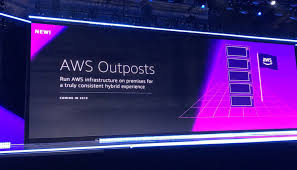
Commvault data protection software now fully tested and validated to support AWS Outposts

Commvault announced on Thursday that Commvault software has been tested and validated to support AWS Outposts, which is a new, fully-managed service that extends Amazon Web Services (AWS) infrastructure, services, APIs and tools to virtually any data center, co-location space, or on-premises facility for a truly consistent hybrid cloud experience.

Many customers need to keep certain workloads on-premises while managing other workloads in the cloud. Commvault has robust and expansive support for the ever-growing number of diverse workloads rapidly migrating to AWS from other platforms and delivers the same look, feel and performance for data protection and management on-premises as it does in the cloud. 


As a complement to AWS Outposts, Commvault’s software provides a true single solution, not just a single interface, which creates cost efficiencies, provides simplicity and reduces risk.

Commvault is an Advanced Technology Partner in the AWS Partner Network (APN) and holds AWS Storage Competency status. Working with the AWS engineering team allows Commvault to offer integrated cloud storage solutions and support, giving customers the ability to migrate, backup and store data in the cloud. The depth and breadth of Commvault’s software with the wide array of storage services available from AWS allows customers to rest assured that their data is secure and available in the cloud. 


“Our tested and validated support for AWS Outposts allows our customers to leverage Commvault’s powerful cloud data protection and management capabilities on AWS,” said Karen Falcone, Vice President of Worldwide Cloud GTM, Commvault. “With the growth of cloud services and so many Commvault customers moving into AWS, we are helping organizations achieve the same level of data protection in the cloud as they did on-premises without the complexity and costs of installing and managing infrastructure.”


In October, Commvault announced product and experience enhancements to Commvault Activate, its data insights and governance solution that gives users greater visibility into their data, identifies opportunities for storage efficiencies and manages risk. Enhancements include the addition of file access controls for file storage optimization and new redaction functions with sensitive data governance. 

Tuesday, December 17, 2019

Oracle makes it to DISA Impact Level 5 provisional authorization for Oracle Cloud Infrastructure

Following closely on the heels of Oracle achieving FedRAMP authorization, Oracle announces Tuesday three new government regions: Ashburn, Virginia; Phoenix, Arizona; and Chicago, Illinois. These regions have achieved DISA Impact Level 5 provisional authorization (IL5 PATO), providing a cloud environment where U.S. Department of Defense (DoD) and other federal customers can harness the power of Oracle Cloud to unlock innovation, improve mission performance, and enhance service delivery.  

This is an important milestone in Oracle’s journey to deliver innovative cloud services with consistent high performance and exceptional security to the entire U.S. government. In 2020, Oracle plans to bring additional full-scale Gen 2 Cloud Regions online to support the classified missions of the US Government.


“U.S. DoD and other Federal customers are continually looking for new, secure ways to improve citizen services and keep our nation safe,” said Don Johnson, executive vice president, Oracle Cloud Infrastructure. “Oracle’s Generation 2 Cloud was engineered to deliver highly secure, high-performance, cost effective infrastructure that helps government organizations address the needs of the nation today and tomorrow.” 

Oracle has been a key technology partner of the U.S. government. Currently, more than 500 government organizations take advantage of Oracle’s technologies and superior performance. State, local and federal government customers using Oracle to modernize their technology include Defense Manpower Data Center (DMDC) and the U.S. Air Force.

The Department of Defense recently awarded a contract to Oracle for its Oracle Cloud Infrastructure to support a large portion of the enterprise human resource portfolio. The award modernizes existing infrastructure and will assist the Defense Manpower Data Center in providing necessary human resource services and capabilities to its military members, veterans and their families.

With Oracle Cloud Infrastructure, customers benefit from best-in-class security, consistent high performance, simple predictable pricing, and the tools and expertise needed to bring enterprise workloads to cloud quickly and efficiently. In addition, Oracle now provides organizations with a complete set of solutions for any high performance computing (HPC) workload, enabling businesses to capitalize on the benefits of modern cloud computing while enjoying performance comparable to on-premises at a lower cost.

Oracle Cloud Infrastructure has achieved certifications and attestations for key security standards and compliance mandates. These independent third-party assurance programs demonstrate Oracle’s commitment to security and to meeting the needs of the public sector. These IL5 PATO government regions will launch with initial Oracle services including VM and bare metal compute (CPU and GPU), storage (including archive, block, and object storage), database, identity and access management, key management service, load balancer, and Exadata cloud service.


“Oracle Cloud Infrastructure brings incredible performance, flexibility, security, and cost-savings benefits to our federal civilian, commercial and higher education customers,” said Paul Seifert, federal sector president, Mythics. “Mythics’ DoD customers will now be able to leverage Oracle Cloud to better serve the unique requirements of the DoD at home and abroad.”

“We’re excited to see the Oracle Cloud Infrastructure achieve DISA Impact Level 5 provisional authorization, as it provides additional options that our federal government clients—especially those seeking to migrate large and complex Oracle-based solutions to the cloud—can leverage,” said Anthony Flake, managing director of Accenture Federal Services’ Oracle practice.

McAfee joins with Google Cloud to integrate McAfee Security offerings with GCP for Linux and Windows workloads, containers

McAfee and Google Cloud entered into an alliance to integrate key McAfee solutions for endpoint and container security within Google Cloud. Under this new partnership, McAfee will tightly integrate its endpoint security solutions for Linux and Windows workloads, as well as its MVISION Cloud solution for container security, on Google Cloud infrastructure.

Several enterprise customers leverage virtual machines (VMs) running in the cloud to handle key Linux and Windows workloads. Ensuring security of these workloads is critical. With this new integration, customers will be able to deploy McAfee’s advanced endpoint security solutions across these key workloads and VMs via Google Cloud Marketplace.


McAfee’s workload security technology uses advanced machine learning and cloud analytics to help protect against file-based, fileless, and script-based threats at scale for workloads deployed on Google Cloud.

Google Cloud provides organizations with critical infrastructure, platform capabilities and solutions, along with expertise, to reinvent their business with data-powered innovation on modern computing infrastructure. The Mountain View, California-based company delivers enterprise-grade cloud solutions that leverage Google technology to help companies operate more efficiently, modernize for growth and innovate for the future. Customers in more than 150 countries turn to Google Cloud as their trusted partner to solve critical business problems.  

McAfee is the device-to-cloud cybersecurity company. Inspired by the power of working together, McAfee creates business and consumer solutions that make the world a safer place. 


McAfee MVISION Cloud for Containers service extends data security, threat prevention, governance, and compliance capabilities of the MVISION Cloud platform to provide additional security for container-based workloads on Google Cloud. Organizations can also leverage MVISION to integrate security into DevOps processes and toolsets to discover and address security issues before applications are deployed.

“Increasingly, customers are choosing to move critical workloads and applications to the cloud because of the strong security protections it can provide,” said Anand Ramanathan, vice president of product and marketing at McAfee. “As more of these enterprises choose to leverage Google Cloud’s hyperscale capabilities, we’re excited to integrate our core capabilities in VM and container security to ensure Google Cloud customers can benefit from the highest levels of data protection and threat prevention.”

“We’re excited to partner with McAfee to bring their proven, trusted security capabilities to enterprise customers,” said Kevin Ichhpurani, corporate vice president, Global Ecosystem at Google Cloud. “Integrating McAfee’s solutions into Google Cloud means customers will have even more tools to ensure the highest levels of data security and protections as they migrate mission-critical workloads to the cloud.”

Saturday, December 14, 2019

Kaspersky research finds 174 municipal institutions targeted with ransomware in 2019

According to Kaspersky security experts, 2019 has seen a significant spike of ransomware attacks on municipalities. This conclusion comes after the company’s researchers observed at least 174 municipal institutions with more than 3,000 subset organizations have been targeted by ransomware throughout the last year. This represents a 60 percent increase from the same figure in 2018.


Ransomware is notorious in the corporate sector for financial devastation and has affected businesses around the world for several years. This year has seen rapid development of an earlier trend where malware distributors have targeted municipal organizations. 

Researchers note that while these targets might be less capable of paying a large ransom, they are more likely to agree to cybercriminals’ demands. Blocking any municipal services directly affects the welfare of citizens in financial losses as well as other significant and sensitive consequences.

When considering publicly available information, ransom amounts have varied greatly with highs reaching up to $5,300,000 and $1,032,460 on average. Researchers note that these figures do not accurately represent the final costs of an attack, as the long-term consequences are far more devastating.

The malware that was most often observed were varied, yet three families were named as the most notorious by Kaspersky researchers: Ryuk, Purga and Stop. Ryuk appeared on the threat landscape more than a year ago and has since been active all over the world in public and in the private sector. Its distribution model usually involves delivery via backdoor malware which spreads by the means of phishing with a malicious attachment disguised as a financial document. 


Purga malware has been recognized since 2016, yet only recently municipalities have been discovered to fall victims to this Trojan having various attack vectors from phishing to brute force attacks. Stop cryptor is relatively new as it is only a year old. It propagates by hiding inside software installers. This malware continues to be prevalent, ranking at number seven in the top 10 most popular cryptors ranking of the third quarter this year.

“One must always keep in mind that paying extortionists is a short-term solution which only encourages criminals and keeps them funded to quite possibly repeat the same acts,” said Fedor Sinitsyn, a security researcher at Kaspersky. “In addition, once a city has been attacked, the whole infrastructure is compromised and requires an incident investigation and a thorough audit. This inevitably results in costs that are in addition to the ransom requested. Based on our observations, cities might be inclined to pay because they usually cover the cyber risks with help of insurance and allocating budgets for incident response. The better approach would be to invest in proactive measures like proven security and backup solutions as well as regular security audit. While the trend of attacks on municipalities is only growing, it can be stifled by adjusting the approach to cybersecurity and what is more important by the refusal to pay ransoms and broadcasting this decision as an official statement.”

VirtualWisdom 6.3 enhances infrastructure capacity planning to deepen visibility, simplify capacity management, control costs

Virtana introduced latest version of VirtualWisdom, its hybrid IT infrastructure management and AIOps platform for mission-critical workloads. VirtualWisdom 6.3 is the initial product launch since Virtana’s rebrand in October, and continues the company’s push into capacity management with global storage array analytics, an expanded range of integrations, and new portable reports and dashboards.

Mission-critical hybrid applications combine resources in public clouds, with physical or virtual resources residing in private data centers. For these crucially important workloads, operating at web-scale, managing cost, performance, and capacity has never been more complex or important. 


To gain the insights and operational control that deliver efficient, cost-effective operation, organizations need real-time visibility, automated discovery, AI-powered analytics, and immediate access to best-practice solutions that proactively solve infrastructure-related performance and capacity issues for critical applications.

The VirtualWisdom release features the new Capacity Auditor, a global storage array analytic that offers a unique approach to global capacity management designed to provide app-centric insights and intelligence across hybrid infrastructure and multi-vendor data storage environments. With Capacity Auditor, organizations have a broad view of storage usage and trends across all storage arrays, applications, locations, physical storage assets, and effective capacity.

The VirtualWisdom 6.3 release includes support for Oracle’s Solaris, Red Hat KVM, and Pure Storage solutions that provide all the power of the VirtualWisdom platform to applications using infrastructure within these environments, and management of infrastructure elements that live within them. It also enhances VirtualWisdom’s continuous real-time infrastructure discovery with simple, intuitive dashboards and reports for servers, storage, and networks. Enabling immediate insights into critical relationships between infrastructure elements, visibility into vital statistics, and the capability to automatically apply customizable information sets for identification and cost.


The offering empowers users to share collective insights, dashboards and reports across the VirtualWisdom community. Customers and partners can easily exchange best-practice monitoring reports and visualizations unique to specific environments and applications. Its hybrid, real-time application views make it easy to visualize hybrid applications that cross multiple technology boundaries in one view – including applications that span multiple clouds (AWS, Azure), virtual environments (VMware, KVM, HyperV, PowerVM) as well as physical systems.

VirtualWisdom provides real-time, data-driven lifecycle recommendations to assure performance, speed problem resolution, automate workload optimization, free-up capacity, and ensure resource availability. AI-powered capacity forecasting helps organizations avoid capacity-driven problems before they can happen, and AI-powered workload optimization keeps applications operating within SLAs.

“To provide organizations with a competitive advantage, IT needs to use and manage their resources efficiently. IT professionals need tools to enable them to quickly resolve problems, even as the infrastructure becomes increasingly more complex. They also need to automate as many of the mundane IT tasks as possible,” said George Crump, President and Founder of Storage Switzerland. “Powered by AI/ML capabilities, VirtualWisdom offers recommendations and automated problem resolution, providing customers with deep infrastructure visibility.”

“The Virtana VirtualWisdom platform has been a fundamental enabler of our mission-critical manufacturing technology solutions and services for many years now,” said Todd Weeks, Plex Systems Global VP of Cloud Operations. “Our ability to offer our customers nearly 100% business continuity in a highly efficient cloud infrastructure relies on the real-time infrastructure visibility and AI-powered analytics that are unique to the VirtualWisdom platform.”

“Digital transformation is driving exponential data growth as today’s enterprises must have global visibility into all storage resources to continuously meet these ever-growing demands. Point solutions to managing data sets across multiple vendor storage environments result in highly fragmented, manual and wasteful practices and resources – and can put entire applications at risk,” said Tim Van Ash, SVP of Products at Virtana. “With application aware, predictive insight into the underlying digital infrastructure, VirtualWisdom offers the industry’s first and only global infrastructure capacity auditor and forecaster that can providing real-time visibility into mission-critical digital workload infrastructure.”

Friday, December 13, 2019

IDC announces that global converged systems market grows 3.5 percent year over year during the third quarter

According to data released this week by the IDC Worldwide Quarterly Converged Systems Tracker, global converged systems market revenue increased 3.5 percent year over year to US$3.75 billion during the third quarter of this year. 

IDC's converged systems market view offers three segments: certified reference systems and integrated infrastructure, integrated platforms, and hyperconverged systems. The certified reference systems and integrated infrastructure market generated roughly $1.26 billion in revenue during the third quarter, which represents a contraction of 8.4 percent year over year and 33.7 percent of all converged systems revenue. 


Integrated platforms sales declined 13.9 percent year over year in the third quarter of this year, generating $475 million worth of sales. This amounted to 12.6 percent of the total converged systems market revenue. 

Revenue from hyperconverged systems sales grew 18.7 percent year over year during the third quarter of 2019, generating nearly $2.02 billion worth of sales. This amounted to 53.7 percent of the total converged systems market.

"The converged systems market continues to grow despite a challenging overall datacenter infrastructure environment," said Sebastian Lagana, research manager, Infrastructure Platforms and Technologies at IDC. "In particular, hyperconverged solutions remain in demand as vendors do an excellent job positioning the solutions as an ideal framework for hybrid, multi-cloud environments due to their software-defined nature and ease of integration into premises-agnostic environments."

IDC offers two ways to rank technology suppliers within the hyperconverged systems market: by the brand of the hyperconverged solution or by the owner of the software providing the core hyperconverged capabilities. 


As the data relates to the branded view of the hyperconverged systems market, Dell Technologies was the largest supplier with $708.4 million in revenue and a 35.1 percent share. Nutanix generated $262.2 million in branded hardware revenue, representing 13.0 percent of the total HCI market during the quarter. There was a three-way tie for third between Cisco, Hewlett Packard Enterprise, and Lenovo, generating $109.0 million, $91.9 million, and $91.5 million in revenue each, which represents 5.4 percent, 4.6 percent, and 4.5 percent share of the market share respectively. 

From the software ownership view of the market, new systems running VMware hyperconverged software represented $766.2 million in total in the third quarter of this year vendor revenue, or 38.0 percent of the total market. Systems running Nutanix hyperconverged software represented $549.2 million in third quarter vendor revenue or 27.2 percent of the total market. Both amounts represent the value of all HCI hardware, HCI software, and system infrastructure software sold, regardless of how it was branded at the hardware level. 

Thursday, December 12, 2019

Lightbits Labs debuts initial NVMe/TCP clustered storage offering that helps protect against data loss and service interruption at scale

Lightbits Labs, provider of NVMe over TCP (NVMe/TCP) software-defined disaggregated storage, advanced  on Wednesday its software solution, LightOS, to deliver the first NVMe/TCP clustered storage solution.

With more companies moving away from direct attached storage (DAS), and with storage requirements typically growing far faster than compute requirements, both public-cloud providers and private-cloud builders are looking for ways to separate storage and compute so each can scale separately. 


One of the limiting factors to scaling disaggregated storage, however, is the need for high availability across clusters of storage and compute. Lightbits LightOS delivers the availability, flexibility and efficiency of hyperscale cloud infrastructure to on-premise data centers.

LightOS provides software-defined disaggregated storage for cloud data centers delivering similar performance as direct-attached NVMe SSDs and up to a 50 percent reduction in tail latency; independent scaling of storage and compute, driving better infrastructure utilization and efficiency and providing unparalleled flexibility; and standards-based NVMe/TCP block storage access protocol for application servers to storage servers communication

LightOS clusters leverage standard NVMe 1.4 multipathing and offers data replications on storage target side, which provides transparency to the client with quick failover. It also includes distributed and durable cluster management with fast failover handling; no single point of failure in data and control paths, and allows multiple LightOS clusters can exist in the same cloud data center and can be aggregated and managed as one large cloud-scale block storage solution.


LightOS is now the first NVMe/TCP storage solution that protects against data loss and avoids service interruptions at scale. In the presence of server, storage, or network failures, LightOS maximizes operational efficiency, ensuring applications continue working in the presence of failures, and failover is handled automatically, keeping data fully consistent and available.

The average cost of IT downtime is enormous. According to Gartner, the average loss is $5,600 per minute. This can add up to more than half a million dollars lost per hour at the higher end.

“At cloud scale, everything fails, so we built LightOS to capture all the benefits of disaggregated storage while providing exceptional durability and availability to prevent service disruption,” said Kam Eshghi, chief strategy officer at Lightbits Labs.

For cloud-native applications, access to available, performant and deployable infrastructure is key to business agility and application experience, at any scale - regardless of whether deployed as five nodes, five hundred nodes, or thousands of nodes.

Installed on commodity servers in large-scale data centers, LightOS is optimized for I/O intensive compute clusters, such as Cassandra, MySQL, MongoDB, and time series databases. With end-to-end NVMe, LightOS delivers high performance and consistently low latency. The result is a 10 times increase in storage reliability and 50 percent decrease in total cost of ownership (TCO). 


As a standard-based, target-only solution that does not require installing any proprietary software on the client side, the ease of deployment at scale is unmatched. LightOS is built to run in existing data center, requiring no changes to application servers or network infrastructure, so that deploying it at scale is a breeze.

As LightOS provides highly available, flexible, and efficient disaggregated storage, application teams can focus their efforts on developing new services to achieve their business goals, while lowering spend and delivering high performance.

Masimo secures FDA clearance for neonatal RD SET Pulse Oximetry sensors with improved accuracy specifications

Masimo announced that RD SET sensors with Masimo Measure-through Motion and Low Perfusion SET pulse oximetry have received FDA clearance ...