Showing posts with label encryption. Show all posts

Saturday, December 28, 2019

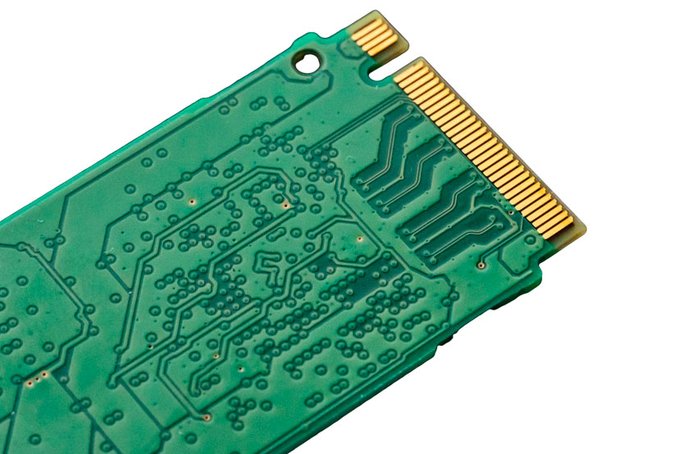
Greenliant SATA 2.5-inch EnduroSLC industrial enterprise SSDs deliver SLC data storage that provide ultra high endurance

Greenliant is currently sampling its SATA 2.5-inch EnduroSLC Industrial Enterprise EX Series solid state drives (SSDs) for primary storage applications that require ultra high endurance under extreme temperature conditions. 

Designed with Greenliant’s EnduroSLC technology, SATA 2.5-inch Industrial Enterprise EX Series SSDs provide ultra robust data retention and ultra high system-level lifetime endurance of 30 drive writes per day (DWPD) for 5 years. EnduroSLC is a proprietary 3D NAND management technology that delivers high reliability applications requiring superior data retention and endurance in extreme temperature, high stress environments. 


With advanced hardware ECC capabilities and NAND flash management algorithms, EnduroSLC Technology significantly extends the write endurance of 1-bit-per-cell (SLC) SSDs reaching industry leading 250K+ program-erase (P/E) cycles. EnduroSLC enabled products meet robust data retention requirements under complex temperature conditions and support wide cross-temperature ranges between data programming and reading. Further, due to its substantially lower bit error rate, an EnduroSLC SSD provides better consistency in read/write performance throughout product lifetime. 

The SATA 2.5-inch EnduroSLC industrial enterprise SSDs with 1-bit-per-cell (SLC) NAND include ultra high endurance that reaches 30 DWPD for five years; high capacity offered from 800 gigabytes to 1.92 terabytes; on-chip adaptive RAID that improves SSD reliability; power interrupt data protection that helps prevent data corruption during power failures; industrial temperature that operates between -40 and +85 degrees Celsius; and data security supports AES 256-bit encryption and crypto erase.

By leveraging over 25 years of solid state storage design expertise, Greenliant is dedicated to developing durable, reliable and secure storage solutions for embedded systems and enterprise data centers. The company is headquartered in Silicon Valley with product development centers in Santa Clara, Beijing, Shanghai, Xiamen and Hsinchu.

“Greenliant has brought its SLC NAND expertise to the enterprise with its new line of EnduroSLC Industrial Enterprise EX Series SSDs,” said Xuanhui Li, vice president of business development for datacenter products, Greenliant. “With high reliability and outstanding quality of service, Greenliant’s industrial enterprise storage products are ideal for mission critical, I/O intensive applications in aerospace, defense, transportation, energy and power, communications and industrial control.”

The SATA 2.5-inch Industrial Enterprise EX Series expands the EnduroSLC product family, which also includes SATA M.2 2242/2280, mSATA, SATA 2.5-inch and CFast ArmourDrive, and SATA 6Gb/s NANDrive and 100-ball/153-ball eMMC NANDrive ball grid array (BGA) SSDs.

Greenliant is sampling its new G3200 Industrial Enterprise EX Series SSDs to customers now, and expects to start shipping in volume production by end of this year. Greenliant is also shipping its 3-bit-per-cell (3D TLC NAND) G3100 Enterprise PX Series SSDs in capacities from 480 GB to 3.84 TB. 

Wednesday, December 11, 2019

Trend Micro reveals that bug in Ryuk ransomware’s decryptor can lead to data loss in certain files

Ryuk’s decryptor tool — provided by the threat actors behind the ransomware to victims who have paid ransom demands — could actually cause data loss instead of reinstating file access to users. According to a blog post from Emsisoft, a bug with how the tool decrypts files could lead to incomplete recoveries, contrary to what the decryptor is actually meant to achieve.

While Ryuk has gained most of its notoriety due to who it targets and how much it tries to extort, the ransomware variant has actually seen a number of evolutions to its capabilities, which includes a revised encryption process. 


To make encryption faster and more efficient, Ryuk will only partially encrypt files that are larger than 57,000,000 bytes (approximately 54.4 megabytes) in 1,000,000 byte blocks — using a formula to compute how many of these blocks it will encrypt.

Traditionally, a file infected by Ryuk will contain a marker that shows whether it has already been previously encrypted with the Hermes ransomware, an earlier malware variant on which Ryuk was based. However, in addition to the Hermes marker, these partially encrypted files will also show a number beside the marker indicating how many of the 1,000,000 byte blocks were encrypted.


Due to a bug in how this number is calculated, the latest versions of Ryuk might accidentally truncate some files, removing a single byte of data from the file it was supposed to restore.

While a single byte might seem like a miniscule amount to get worried about (in most cases, the last byte is actually unused) — some types of files, such as those used in Oracle databases, store information in the last byte. This means that the removal of this single byte can actually result in an incomplete recovery, depending on the file type that was encrypted.

According to Trend Micro’s 2019 midyear security roundup, ransomware detections in the first half of the year increased by 77 percent compared to the second half of operations as threat actors seek to evolve their tools and methods. Ryuk is perhaps the most prevalent of the current ransomware families: It has earned the threat actors behind it millions of dollars from victims — typically, major organizations in both public and private sectors.

Given how widespread ransomware still is, it will benefit both organizations and individual users to regularly practice these recommendations to minimize the chances of a successful ransomware attack.


The simplest and perhaps most effective method to keep important files and data safe is to maintain regular backups — preferably using the 3-2-1 method of keeping three backup copies in at least two separate formats, with one copy offsite. IT administrators should ensure that systems, networks, servers, and applications are consistently updated and patched to prevent threat actors from taking advantage of vulnerable software and systems to deliver ransomware.

Organizations should cover all possible attack surfaces by implementing the principle of least privilege, where employees can only access parts of the system they need. Ransomware victims should also refrain from paying ransomware demands, as this encourages threat actors to continue with their campaigns. Furthermore, paying the ransom doesn’t even guarantee that the encrypted data will be restored, as seen in this scenario.


Organizations without dedicated security teams that want to bolster their security strategy can also look into taking advantage of services such as Trend Micro Managed XDR, which offers a wide scope of visibility and expert security analytics by integrating detection and response functions across networks, endpoints, emails, servers, and cloud workloads. 

The Managed XDR team is no stranger to Ryuk, and has extensive real-world experience investigating and analyzing the ransomware variant — as well as offering remediation advice — to customers.

Cohesity and HPE assist TEC Eurolab to maximize data security and resiliency, improve customer service

Cohesity announced Tuesday that TEC Eurolab has doubled its productivity and increased its revenues, after deploying a disruptive data management solution provided by Cohesity and HPE.

TEC Eurolab has seen major cost and efficiency benefits by using the joint Cohesity-HPE solution to enable intelligent file share services and enhance data security and resiliency. The solution, delivered by local systems integrator NETMIND, is now helping the company effectively serve customers across a multitude of sectors including aerospace and defense, automotive and motor racing, manufacturing, and biomedical industries.


The Cohesity-HPE joint solution for TEC Eurolab offers zero data loss and improved security, compliance and data integrity; 50 percent reduction in data retrieval time compared to previous solution; 100 percent improved production output across the Tomographic Center; 30 percent operating expense savings in reduced personnel time spent on data management; 20 percent capital expenses savings due to reduced burden on workstations; and offers quick and easy file search and recovery across multiple workstations with a single UI.

Founded in 1990, TEC Eurolab is a private corporation based in the province of Modena, Italy. TEC Eurolab is a prominent center of technical expertise and laboratory testing with the mission of improving the reliability of chemical, mechanical, and structural properties of products for its global customers, and providing specialised support and knowledge of materials, processes, and industry standards.


“The center can now double the number of analyses it performs each week and is able to deliver results to our customers faster with no performance bottlenecks,” said Marco Moscatti, board member and production director, TEC Eurolab.

Industrial tomography scanners deal with large, high-resolution 3D images, resulting in the center’s data growth of 50 percent per year. However, it has been challenged by legacy technology that couldn’t keep up with the increasing data volumes. The existing environment failed to efficiently and reliably process massive volumes of data.

The Tomographic Center used numerous workstations for file acquisition, 3D reconstruction and analysis. These workstations were processing many copies of the same data separately, slowing down operations and causing data loss, legal risks, and missed service level agreements. 

TEC Eurolab had a number of requirements, including a secure, central data store to ensure data integrity and predictable recovery, efficient file sharing, secure and reliable target storage for backup, non-disruptive scalability, and a seamless integration with its existing HPE environment.


Outstanding performance results from a pilot test driven by the software-defined data center specialist NETMIND led TEC Eurolab to choose Cohesity DataPlatform software on certified HPE Apollo r2200 Gen 10 servers as their preferred file share and scale-out target storage for backups.

With the new solution in place, data from all three types of workstations is written to the Cohesity cluster that acts as a central repository for acquisition, 3D reconstruction, and analysis data. All data resides on a Cohesity file share, powered by Cohesity SmartFiles —  intelligent file services built into the Cohesity DataPlatform — resulting in more efficient file sharing and faster recovery, all from a central management user interface (UI).

Additionally, with robust security and data resiliency provided by Cohesity DataPlatform, TEC Eurolab greatly reduced the risk of data being lost or compromised, and enhanced its ability to meet regulatory compliance.

“We have reduced staff operational time by 30 percent and significantly improved data resiliency with Cohesity. Best of all, we have doubled our production capacity and are able to meet customer SLAs without compromising security and compliance, which contributed in part to an increase in Tomographic Center revenues. We are now looking to further maximize these benefits across the organization by expanding Cohesity to other use cases such as integrated backup, recovery, and analytics,” said Moscatti.

“With the Cohesity-HPE joint solution, TEC Eurolab is getting the best of both worlds,” said Giovanni Golinelli, pre-sales manager and systems and storage architect, NETMIND. “They are now able to adhere to their customers’ strict security needs and industry regulatory requirements. They have an enterprise-grade solution that combines the security-first approach of Cohesity software with built-in silicon-level firmware protection, encryption, and breach detection of HPE Apollo Gen 10 servers.”

TEC Eurolab is already considering Cohesity for additional use cases across the organization. In the next phase of deployment, TEC Eurolab is considering Cohesity for integrated backup and recovery of all data across the organization as well as using Cohesity MarketPlace apps for anti-virus, in-place analytics, and vulnerability assessment. 

The combination of self-monitoring infrastructure with HPE InfoSight for servers and unified visibility from Cohesity Helios, global SaaS-based management for data and applications, will allow the company to gain predictive insights from their data and further optimize operations.

“We see a lot of potential at TEC Eurolab for further expansion of the joint solution from Cohesity and HPE. TEC Eurolab has already realized tremendous efficiency in their operations by using Cohesity for file shares and as a scale-out backup target and will elevate it to the next level by using Cohesity for integrated backup and recovery,” adds Giovanni Golinelli, Pre-Sales Manager, Systems and Storage Architect at NETMIND. “Future native integration of Cohesity with HPE primary storage portfolio including HPE Nimble Storage and HPE SimpliVity will help accelerate this and make Cohesity their data management platform of choice.”

Monday, December 9, 2019

Kanguru debuts OS Agnostic, its fingerprint encrypted access flash drive with remote management capability

Kanguru launched its OS Agnostic, its Fingerprint Access Hardware Encrypted Flash Drive with remote management capability. This biometric fingerprint access flash drive supplants the bulky pinpads and fussy combo keypads of encrypted devices, making it convenient and easy to use. 

With the tap of the finger, the Kanguru Defender Bio-Elite30 Fingerprint Hardware Encrypted Flash Drive provides quick access to encrypted files.


The Defender Bio-Elite30 Fingerprint Encrypted Flash Drive is OS platform agnostic; 256-bit hardware encryption (XTS Mode); and assigns multi-finger access for each fingerprint or user(s). It also features new command console with onboard browser; option to remotely manage with Kanguru Remote Management Console (KRMC); and comes with optional on-board antivirus, real-time scanning protection by BitDefender. It is also RSA-2048 digitally-signed secure firmware and TAA compliant.


Being OS Agnostic, the Defender Bio-Elite30 can be used on virtually any machine, from Windows and MacOS, to medical equipment, smart TVs and even ATMs for making bank machine updates. This makes it highly versatile for all types of industries.

With best-in-class AES 256-Bit hardware encryption, the new biometric fingerprint encrypted flash drive allows a user to assign multiple finger access for themselves, and/or others whom they authorize. Permissions can be enabled for full read/write secure entry, or read only restricted access to allow users to simply view the encrypted files.


The Defender Bio-Elite30 Fingerprint secure flash drive is USB powered, rising above all other competitive devices that require a battery which could fail at the worst possible time.

Sunday, December 8, 2019

Google extends its Android TLS adoption program; covers 80% apps by default

Google announced this week that 80 percent of Android apps are encrypting traffic by default. The percentage is even greater for apps targeting Android 9 and higher, with 90 percent of them encrypting traffic by default.

Android is committed to keeping users, their devices, and their data safe. One of the ways that Google is keeping data safe is by protecting network traffic that enters or leaves an Android device with Transport Layer Security (TLS). 


Android 7 (API level 24) introduced the Network Security Configuration in 2016, allowing app developers to configure the network security policy for their app through a declarative configuration file. To ensure apps are safe, apps targeting Android 9 (API level 28) or higher automatically have a policy set by default that prevents unencrypted traffic for every domain.

The Network Security Configuration feature lets apps customize their network security settings in a safe, declarative configuration file without modifying app code. These settings can be configured for specific domains and for a specific app. 


This feature can customize which Certificate Authorities (CA) are trusted for an app's secure connections. For example, trusting particular self-signed certificates or restricting the set of public CAs that the app trusts. It also safely debugs secure connections in an app without added risk to the installed base; protects apps from accidental usage of cleartext traffic; and restricts an app's secure connection to particular certificates.

Since Nov. 1 2019, all app (updates as well as all new apps on Google Play) must target at least Android 9. As a result, we expect these numbers to continue improving. Network traffic from these apps is secure by default and any use of unencrypted connections is the result of an explicit choice by the developer.


The latest releases of Android Studio and Google Play’s pre-launch report warn developers when their app includes a potentially insecure Network Security Configuration (for example, when they allow unencrypted traffic for all domains or when they accept user provided certificates outside of debug mode). 

This encourages the adoption of HTTPS across the Android ecosystem and ensures that developers are aware of their security configuration.

Friday, December 6, 2019

Kaspersky shockingly finds that ransomware is now targeting back-up data

Kaspersky researchers identified on Thursday a new type of ransomware attack, Network Attached Storage (NAS), which is actively growing in popularity. Targeting NAS poses new risks for back-up data usually stored on devices. With NAS largely perceived as a secure technology, users often remain unprepared for the possibility of infection, putting their data at higher risk.

Encryption ransomware is a malware that applies advanced encryption methods so files cannot be decrypted without a unique key. This leaves the infected device owner stuck with a locked device and a demand to pay a ransom in order to regain access to files. 


While users are typically infected with ransomware via email or exploit-kits planted on websites, the new type of attacks on NAS devices use a different vector. Ransomware operators scan ranges of IP addresses looking for NAS devices accessible via the web. 

Although only web interfaces protected with authentication are accessible, a number of devices have integrated software with vulnerabilities in it. This allows attackers to install a Trojan using exploits, which will then encrypt all data on the devices connected to the NAS.


During the third quarter this year, Kaspersky products detected and repelled encryption ransomware attacks on 229,643 Kaspersky products users, which is 11 percent less than during the same period last year. Although the total number of affected users slightly decreased, the report shows that the number of new encryption ransomware modifications grew from 5,195 in the third quarter of last year to 13,138 in the third quarter this year marking 153 percent growth. This development signals cybercriminal interest in this type of malware as means of enrichment.

At the same time, the infamous WannaCry Trojan family retained first place among the most popular Trojans with over a fifth of attacked users having been targeted with malware identified as belonging to this group. 


The top three most popular verdicts that account for almost half of users attacked by cryptors were Trojan-Ransom.Win32.Wanna (20.96 percent users attacked), Trojan-Ransom.Win32.Phny (20.01 percent) and Trojan-Ransom.Win32.GandCrypt (8.58 percent).

Masimo secures FDA clearance for neonatal RD SET Pulse Oximetry sensors with improved accuracy specifications

Masimo announced that RD SET sensors with Masimo Measure-through Motion and Low Perfusion SET pulse oximetry have received FDA clearance ...